
FinkleCraft’s recommended gear page is a curated reference for practical bushcraft, camping, homesteading, and outdoor self-reliance tools. The goal is not to list every product available, but to highlight useful categories of gear that beginners and practical outdoor learners may want to understand before buying.
Gear does not replace skill. A good knife, tarp, fire kit, backpack, or water filter is only useful when you know how and when to use it. Use this page as a starting point for research, then compare options, read current reviews, check safety information, and choose gear that fits your climate, skill level, budget, and actual needs.
How to Think About Bushcraft Gear
There is a difference between camping gear and bushcraft gear. Camping gear often focuses on comfort and convenience. Bushcraft gear has to be judged by a harder standard: can it help you solve real problems outdoors when conditions are wet, cold, tiring, or inconvenient?
The goal is not to carry a massive pack full of gadgets. A beginner bushcraft kit should be simple, durable, and built around the basic needs that matter most outside: cutting, fire, shelter, water, first aid, cordage, and navigation. If a tool does not help with one of those needs, it probably does not belong in your first kit.
This page is not a “buy everything” list. It is a practical guide to the core gear categories worth understanding first. The product links are normal external links, not affiliate links, and FinkleCraft does not currently earn commission from them. They are included as examples so readers can compare the type of gear being discussed.
Gear does not replace skill. A fixed blade knife is only useful if you know how to handle it safely. A ferro rod only matters if you can prepare tinder. A tarp only protects you if you know how to pitch it properly. Use this page as a starting point, then practice with your tools in safe, controlled conditions before relying on them outdoors.
Disclosure:
These are normal product links, not affiliate links. I do not currently earn any commission or associate income from these Amazon links. I’m sharing them as practical gear examples and recommendations only, based on what fits the FinkleCraft bushcraft/self-reliance mindset.
🌲 The Core Bushcraft Kit
1️⃣ Fixed Blade Survival Knife
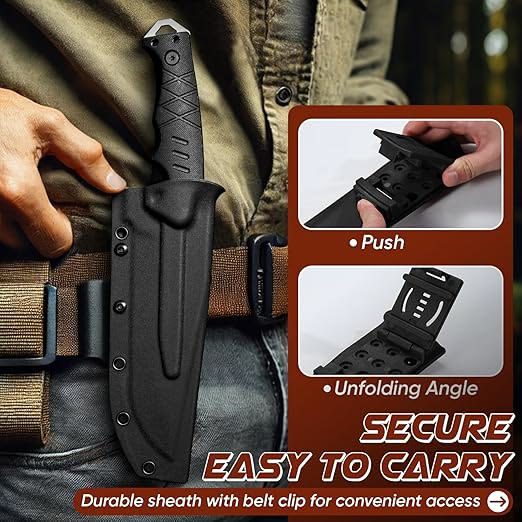
A fixed blade knife is one of the most useful tools in a basic bushcraft kit because it can handle many small camp tasks without the weak hinge point of a folding knife. It can help with feather sticks, notching, food prep, cordage work, light carving, and basic camp chores.
For beginners, the main things to look for are full-tang construction, a comfortable grip, a practical blade length, and a sheath that holds the knife securely. A knife does not need to look tactical to be useful. In most cases, a simple, strong, easy-to-control blade is better than an oversized survival knife that is awkward to carry and harder to use safely.
The biggest mistake is treating a knife like an axe. A fixed blade can process small wood in controlled situations, but it should not be abused for jobs better handled by a saw or hatchet. Learn safe cutting technique first, keep the blade sharp, and use the right tool for the job.
Example gear: View example on Amazon
2️⃣ Folding Saw
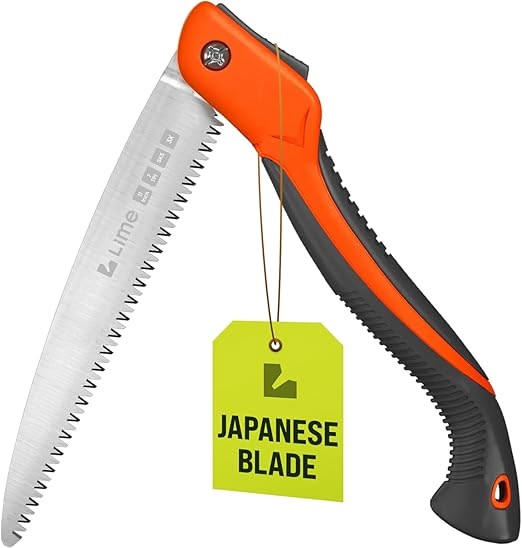
A folding saw is one of the most underrated tools in a beginner bushcraft kit. While a knife is useful for carving, feather sticks, and small camp tasks, a saw is much better for cutting branches, processing small firewood, clearing deadfall, and making basic shelter materials. It does the work more safely and efficiently than trying to force a knife into jobs it was not designed for.
For beginners, look for a folding saw with a strong locking mechanism, a comfortable handle, and a blade long enough to cut wrist-thick branches without feeling flimsy. A compact saw is easier to carry than a full-size bow saw, but it still gives you real cutting ability around camp.
The biggest mistake is treating a folding saw like an indestructible tool. Saw with steady strokes, avoid twisting the blade, and let the teeth do the cutting. A good folding saw can save energy, reduce frustration, and make firewood prep much safer.
3️⃣ Ferro Rod Fire Starter
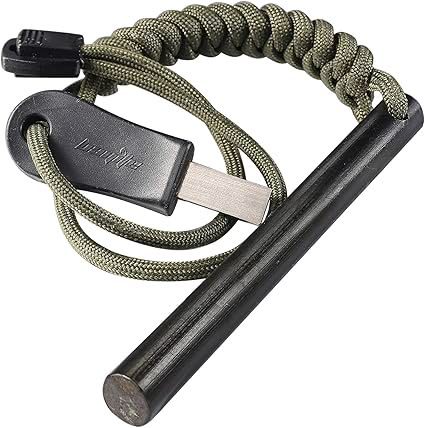
MA ferro rod is a reliable fire-starting tool because it can throw hot sparks even when matches or cheap lighters become wet, cold, or unreliable. It is not magic, though. A ferro rod only works well when you understand tinder, scraping technique, and fire preparation.
For beginners, look for a ferro rod that is large enough to grip comfortably and comes with a decent striker. Smaller rods can work, but they are harder to use when your hands are cold or tired. Pairing a ferro rod with dry tinder, birch bark, fatwood, cotton balls, or a prepared fire kit makes it far more practical.
The biggest mistake is thinking a ferro rod replaces fire-building skill. Sparks are only one part of the process. You still need dry tinder, kindling, airflow, and patience. Practice in safe conditions before relying on it outdoors.
4️⃣ Heavy-Duty Bushcraft Tarp
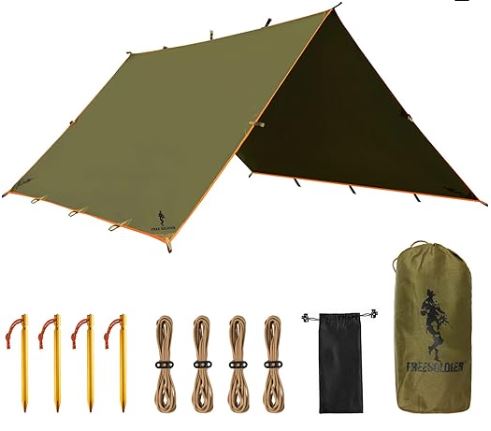
ShA good tarp is one of the most useful shelter items you can carry. It can protect you from rain, block wind, create shade, cover gear, or serve as part of a quick emergency shelter. In bushcraft, shelter matters because exposure can become a serious problem faster than many beginners expect.
For most beginners, a practical bushcraft tarp should be durable, water-resistant, and large enough to create real coverage without being too heavy to carry. Reinforced tie-out points are important because cheap tarps can fail where the cordage pulls against the fabric. A neutral outdoor colour can also help the tarp blend into natural surroundings.
The biggest mistake is owning a tarp but never practicing different setups. A tarp is only useful if you know how to pitch it. Practice a simple lean-to, A-frame, and ridgeline setup before you need one in poor weather.
5️⃣ Paracord (50–100 ft)
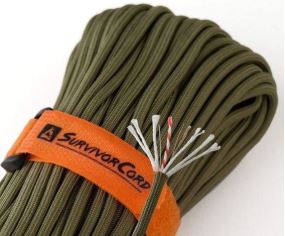
Paracord is useful because cordage solves a lot of small problems outdoors. It can help with tarp setups, gear repairs, hanging items, securing loads, making basic camp improvements, and practicing knots. A small bundle of cord takes little space but can become extremely useful when something breaks or needs to be tied down.
For beginners, standard 550 paracord is a good starting point because it is strong, affordable, and widely available. Bright colours are easier to see around camp, while darker colours blend in better outdoors. Either can work depending on your purpose.
The biggest mistake is carrying cordage without knowing knots. Learn a few basic knots first, such as the bowline, trucker’s hitch, taut-line hitch, clove hitch, and square knot. Paracord becomes much more useful when you can actually control tension, secure shelter lines, and untie your work afterward.
6️⃣ Water Filtration System
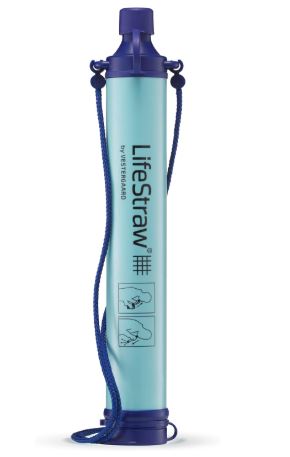
WaA water filtration system is one of the most important pieces of outdoor gear because clean drinking water is not something to gamble with. Even clear-looking streams and lakes can contain bacteria, parasites, sediment, or contamination that may make you sick.
For beginners, a compact water filter is useful because it gives you a practical way to treat water while hiking, camping, or building an emergency kit. Look for a filter that is lightweight, simple to use, and designed for outdoor water sources. Some filters work best for personal use, while others are better for groups or base camps.
The biggest mistake is assuming filtration solves everything. Some filters do not remove viruses, chemicals, or heavy metals. Always read the product details, understand what the filter is rated for, and consider backup treatment methods such as boiling or purification tablets when needed.
7️⃣ Compact First Aid Kit
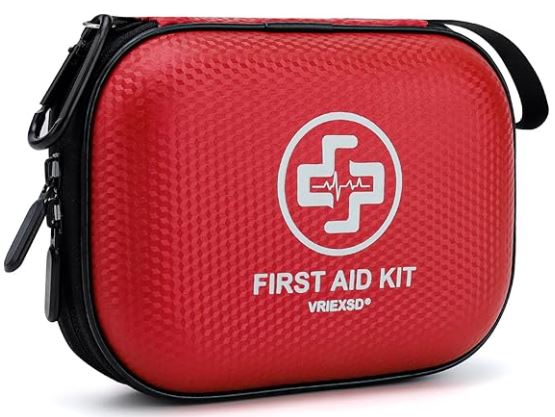
A compact first aid kit is not exciting gear, but it is one of the most responsible things to carry outdoors. Small injuries can become bigger problems when you are far from help, tired, cold, wet, or dealing with sharp tools and uneven terrain.
For beginners, a good kit should cover common outdoor issues such as cuts, scrapes, blisters, minor burns, insect bites, splinters, and basic wound care. It should be small enough that you actually carry it, but complete enough to handle the most likely problems. Adding personal items like medications, allergy supplies, and emergency contact information can make the kit more useful.
The biggest mistake is buying a kit and never opening it. Know what is inside before you need it. Replace expired items, add anything missing, and learn basic first aid skills. A first aid kit is only as useful as the person carrying it.
If You’re Just Starting
If you are brand new to bushcraft, do not try to buy a full kit all at once. Start with the basics and learn how to use them properly. A fixed blade knife, folding saw, and ferro rod will cover many beginner cutting and fire-starting tasks, but only if you practice with them in safe, controlled conditions.
Once you understand those tools, add a tarp, paracord, water filtration system, and compact first aid kit. That gives you a stronger foundation for shelter, water, safety, and basic outdoor problem-solving. Build your kit gradually, test your gear before you depend on it, and avoid buying items just because they look impressive online.
Final Thoughts
Bushcraft is not about owning the most gear. It is about becoming more capable outdoors. Good tools matter, but they are only useful when they support real skills: making shelter, starting fire, treating water, using a knife safely, navigating, staying warm, and making calm decisions when conditions are not perfect.
The best bushcraft gear is simple, durable, and useful in more than one situation. Start with the fundamentals, learn how each item works, and improve your setup as your experience grows. A small, well-practiced kit will always beat a heavy bag full of tools you barely know how to use.
If you are interested in building more long-term self-reliance beyond your outdoor kit, you may also enjoy reading: