
Companion Planting for a Productive Backyard Garden: What Grows Better Together?
Companion planting has a strange reputation in the gardening world. Some people treat it like ancient lost knowledge, where basil magically protects tomatoes and marigolds guard the whole garden like little orange soldiers. Others dismiss it as gardening folklore dressed up for Pinterest. The truth, as usual, is more interesting than either extreme.
If you want to grow more food, become a little more self-sufficient, and make better use of your garden space, companion planting is worth understanding. But it works best when you treat it as a practical garden design tool, not a magic spell. The goal is not to memorize hundreds of plant friendships and enemies. The goal is to understand why certain plants work well together, then use that knowledge to build a garden that is easier to manage, more productive, and less dependent on constant intervention.
This matters even more in a short-season climate like Ottawa Zone 5B. You do not have endless time to experiment with warm-weather crops. Your garden has to make sense quickly. Cool-season crops like lettuce, spinach, peas, radish, carrots, beets, cabbage, kale, and cauliflower can carry a big part of the season, while tomatoes, peppers, cucumbers, zucchini, and beans need warmth, timing, and good placement to perform well. Your seed report shows a strong foundation for exactly that kind of garden, especially with large amounts of lettuce, carrots, parsley, celery, summer savory, spinach, kale, and microgreens.
The real value of companion planting is not just “plant this beside that.” It is learning to think like a small-scale food producer. Which plants grow tall? Which ones shade the ground? Which ones attract pollinators? Which ones mature fast? Which ones need steady water? Which ones can be planted again and again through the season? Once you start asking those questions, companion planting becomes less mystical and much more useful.
What Companion Planting Actually Is
Companion planting is the practice of growing different plants near each other because their relationship may create some kind of benefit. That benefit might be pest confusion, pollinator attraction, better use of space, improved shade, root diversity, or simply a more efficient garden layout. Cornell Cooperative Extension describes companion plants as crops that may improve health or flavor, repel or trap pests, attract beneficial insects, or sometimes interfere with nearby plants.
That last part matters. Companion planting is not only about good combinations. It is also about avoiding bad ones. Some crops compete for the same nutrients, attract similar pests, create too much shade, or simply have different water and spacing needs. A tomato plant and a lettuce plant do not behave the same way. A cucumber vine, a carrot row, and a cabbage bed all create different problems if they are placed without a plan.
At its best, companion planting is garden logistics. It helps you decide where things should go, when they should be planted, and how one crop can support the overall system. This is why old systems like the Three Sisters — corn, beans, and squash — are so fascinating. Corn grows upward, beans climb, and squash spreads across the ground. The system is not magic. It is structure.
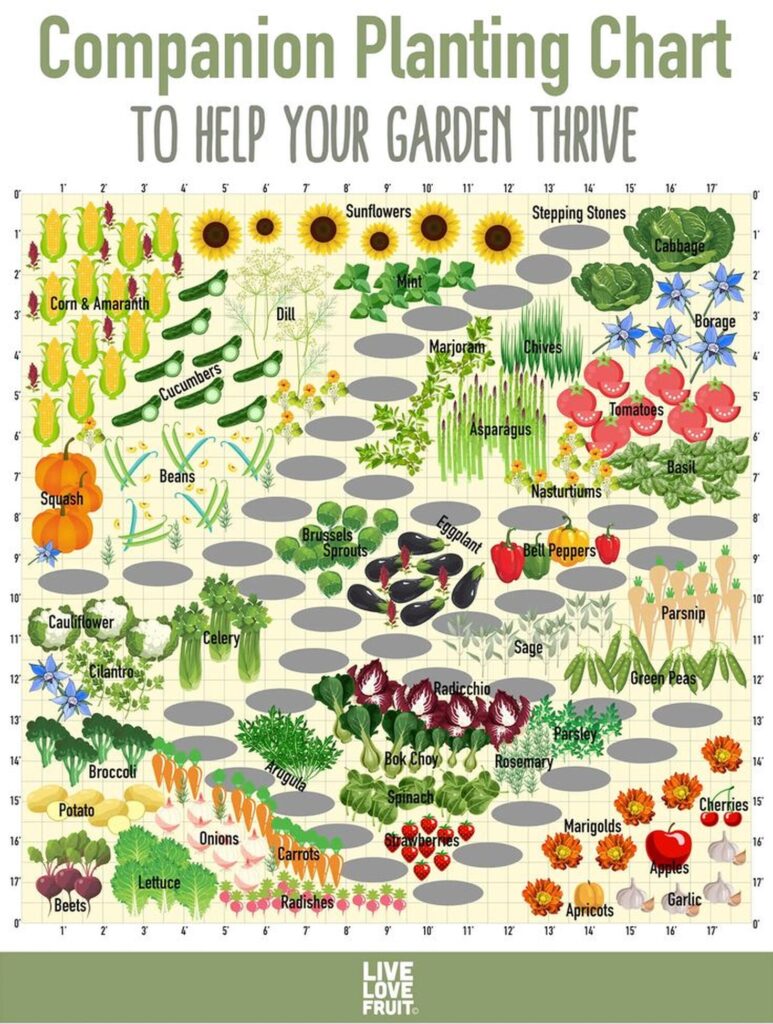
Here is a visual group that would work well near the beginning of the article, showing the basic idea of arranging crops by height, function, and companionship rather than scattering plants randomly.
Why People Believe Companion Planting Works
People believe in companion planting because, at a basic level, it matches what gardeners observe. A garden is not a factory floor. It is a living system. Insects move through it, plants compete for light, roots explore different depths, flowers attract pollinators, and dense planting can either protect the soil or create disease problems.
Aromatic herbs are one reason companion planting has remained popular. Dill, basil, cilantro, parsley, sage, rosemary, chives, and summer savory all bring more than flavor to a garden. They flower, attract insects, create scent confusion, and add diversity to beds that might otherwise be a buffet for pests. Your seed inventory is especially strong in herbs, with basil, dill, parsley, cilantro, and a large amount of summer savory available. That gives you a lot of flexibility.
Another reason is pest behavior. Many insects locate host plants by smell, shape, and chemical signals. When a garden is planted in huge blocks of one crop, pests may find what they want more easily. When crops are mixed with herbs, flowers, and different plant forms, that search can become less direct. This does not make the garden pest-proof, but it can make it less obvious.
Trap cropping is another practical idea behind companion planting. A trap crop is planted because pests prefer it over the crop you want to protect. University of Tennessee Extension explains that trap cropping relies on pest preference for certain plant species, cultivars, or growth stages. That is not folklore. That is pest behavior being used strategically.
The Skeptical View: Companion Planting Is Not Magic
Here is where we need to be honest. Companion planting gets exaggerated online. Some charts make it sound like every plant has best friends and sworn enemies. That can turn gardening into a superstition game instead of a food-growing system.
A lot of companion planting claims are hard to prove because gardens are messy. If someone plants basil beside tomatoes and has a great harvest, was it the basil? Or was it sunlight, soil, compost, spacing, watering, temperature, pruning, and luck? Probably a mix. That does not mean the pairing is useless. It just means we should be careful about pretending every traditional claim is settled science.
The skeptical but useful view is this: companion planting is strongest when it is based on clear mechanisms. Pollinator attraction makes sense. Shade management makes sense. Nitrogen-fixing legumes make sense. Root-depth diversity makes sense. Pest confusion and trap cropping can make sense. But vague claims like “this plant improves the flavor of that plant” should be treated with caution unless there is a clear reason.
For a practical homestead-style garden, this is actually good news. You do not need to believe every chart. You only need to design better beds. That means good spacing, crop rotation, airflow, water access, succession planting, and smart pairings where they make sense.
The First Rule: Put Tall Crops on the North Side
For a garden in Canada or anywhere in the northern hemisphere, your instinct is right: tall plants generally belong on the north side of the garden. That way, they are less likely to cast shade over shorter crops through the day. Extension advice commonly recommends placing tall crops on the north side so they do not shade smaller plants.
This rule becomes especially important if you grow corn, sunflowers, trellised cucumbers, pole beans, peas, or tall tomatoes. Even a productive plant can become a problem if it blocks light from everything behind it. A garden is not just about what grows well together biologically. It is also about geometry.
For a quarter-acre practice garden, you do not have to use the entire space at full intensity in year one. In fact, you probably should not. A smaller organized growing area will usually beat a giant chaotic one. Start with a manageable section, build your soil, learn your sunlight patterns, and expand once you know what works.
A simple north-to-south structure could look like this. Put the tallest crops on the north edge, medium crops in the middle, and low-growing crops toward the south. Keep herbs and flowers scattered as insect-support plants, but do not let them become weeds or shade problems.
A Practical Quarter-Acre Garden Layout
A quarter-acre sounds huge to a beginner, but once you include paths, compost, tool access, water access, pollinator strips, and crop rotation space, it becomes more realistic. You do not need to turn every square foot into production immediately. The smarter move is to create zones.
The north zone should hold your tallest and most structural crops. This is where corn, sunflowers, trellised cucumbers, peas, and tomatoes make the most sense. If you eventually add more tomato varieties, a cherry tomato, a paste tomato, and a slicer would give you much better harvest diversity than relying only on Scotia tomatoes. Your report already flags tomatoes as one of the thinner parts of your current seed inventory.
The middle zone can carry crops like beans, peppers, cabbage, kale, cauliflower, celery, beets, and zucchini. These crops need room, but they do not all behave the same way. Zucchini spreads aggressively, so it should be placed where it will not smother smaller crops. Cabbage, kale, and cauliflower should have airflow and enough space to reduce disease pressure and pest concentration.
The south zone is where your lower crops shine. Lettuce, spinach, radish, carrots, beets, cilantro, parsley, and other herbs can fit beautifully here. This is also where succession planting matters most. Your seed report shows you have a lot of lettuce and carrots, which means you can sow in waves rather than dumping everything into the ground at once.
Best Companion Pairings From This Seed Collection
The strongest garden plan is not based on every possible crop in the world. It is based on what you actually have. Your current seed collection already supports a respectable backyard food garden, especially for cool-season production. The weak spots are mostly warm-season depth: tomatoes, peppers, cucumbers, and storage squash.
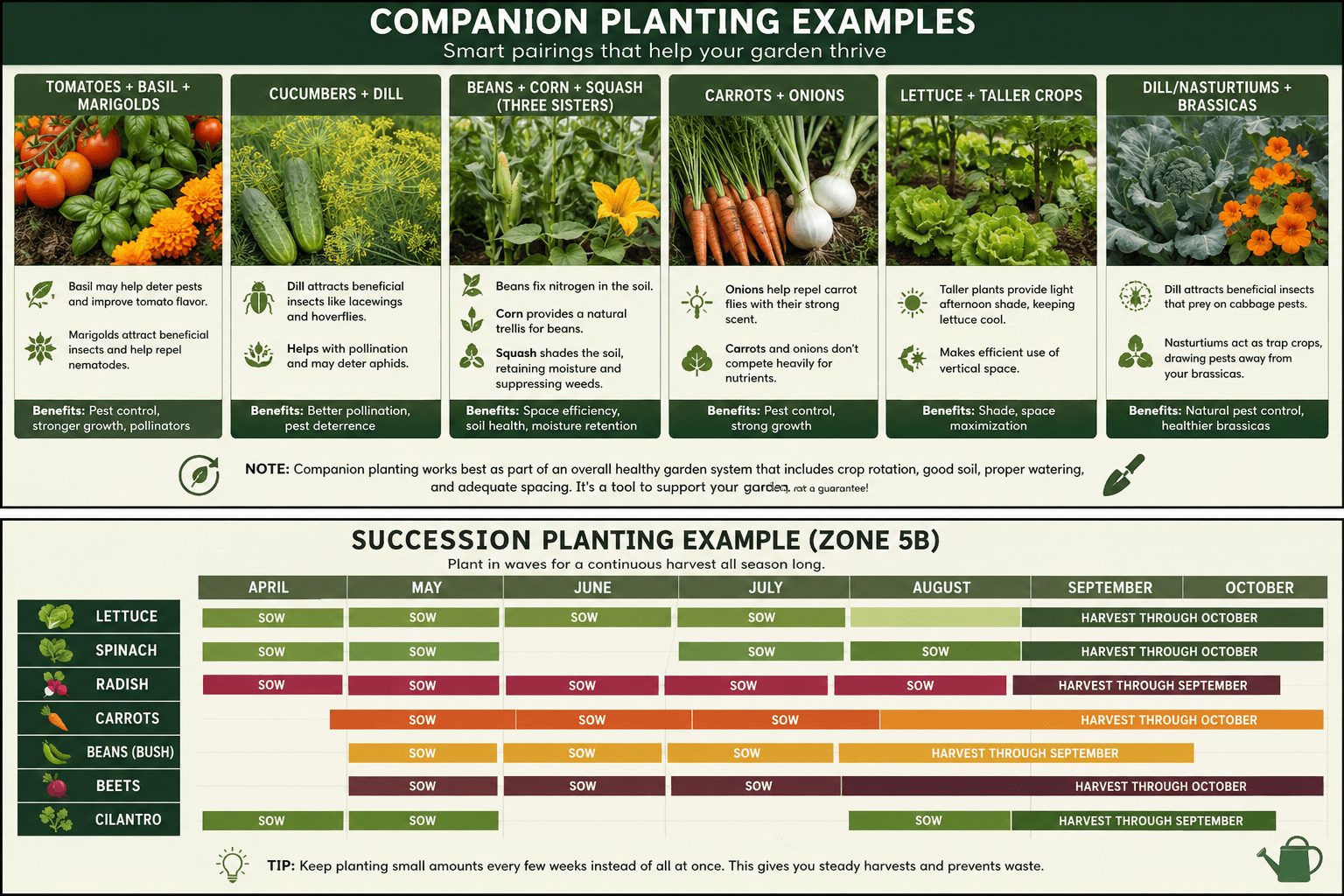
Tomatoes, basil, and marigolds are the classic trio for a reason. Tomatoes are the main crop, basil fills space and adds aromatic diversity, and marigolds can attract beneficial insects while adding color and possible pest-deterrent value. The key is not to overcrowd the tomato bed. Tomatoes need airflow, strong sun, consistent moisture, and support.
Cucumbers and dill are another useful pairing. Dill flowers can attract beneficial insects, and cucumbers need pollination to produce well. Since your cucumber supply is not huge, it would be wise to treat cucumbers as a managed crop rather than an afterthought. Give them warmth, support, and good soil.
Beans and corn can work together, especially if you lean toward a Three Sisters-style system with squash. Beans are legumes, corn offers structure, and squash shades the soil. But in a modern backyard garden, this setup needs enough space and timing. If the corn is too weak or the beans are too aggressive, the system can become messy.
Lettuce and taller crops can also work well together when handled carefully. Lettuce dislikes intense heat, so light afternoon shade from taller plants can extend its usefulness. This is especially helpful in summer when lettuce wants to bolt. But too much shade creates weak growth, so the goal is filtered protection, not darkness.
Carrots, radishes, and lettuce are excellent short-season companions in a practical sense. Radishes mature quickly and can mark rows while slower carrots germinate. Lettuce fills space and can be harvested before larger crops need the room. This kind of pairing is less flashy than “basil loves tomatoes,” but it is often more useful.
What Not to Overdo
The biggest mistake with companion planting is overcrowding. Gardeners get excited, see a beautiful chart, and try to cram everything together. Then the garden becomes a jungle. Airflow drops, watering becomes inconsistent, pests hide easily, and harvesting becomes annoying.
Tomatoes should not be buried in herbs and flowers so deeply that you cannot prune, inspect, or harvest them. Zucchini should not be planted where it can swallow lettuce and carrots. Cabbage-family crops should not be packed so tightly that every cabbage moth in the area finds a perfect buffet.
Another mistake is ignoring water needs. Celery needs constant moisture and patience. Peppers want warm soil and steady growth. Carrots want loose, stone-free soil. Lettuce and spinach want cool conditions. Beans want warmth but not soggy roots. These differences matter more than a cute companion chart.
This is why a good garden plan starts with plant behavior. Companion planting should support the plan, not replace it.
Succession Planting: The Real Secret Weapon
If the goal is to grow more food, succession planting may matter more than companion planting. Succession planting means sowing crops in waves so harvests keep coming instead of arriving all at once. University of Minnesota Extension notes that cool-season crops such as lettuce, cabbage, cauliflower, broccoli, Brussels sprouts, and onions can be planted early, and crops like peas, spinach, lettuce, and radish can germinate well in cooler soil.
This is where your seed inventory is strong. Lettuce, carrots, spinach, cilantro, radish, beets, and beans can all be used in waves. You do not need one massive lettuce harvest. You need fresh lettuce repeatedly. You do not need every carrot ready at once. You need carrots coming through the season.
For self-sufficiency, rhythm beats intensity. A garden that produces steadily is more useful than a garden that overwhelms you for two weeks and then quits. That is the difference between a hobby patch and a food system.
Why This Matters Today
Companion planting matters today because more people are realizing that food security is not just about having a grocery store nearby. It is about skill, resilience, and the ability to produce something useful from your own land. Even a small garden can change how you think.
Growing food teaches timing. It teaches patience. It teaches you that systems matter. You cannot bully a tomato into ripening faster, and you cannot ignore watering for a week and expect lettuce to forgive you. Gardening forces a person to work with reality.
In a survival or homesteading context, that is valuable. Not because you are going to feed your entire family from one backyard overnight, but because each season makes you more competent. You learn what grows well in your climate. You learn what fails. You learn what pests show up. You learn how much food a bed actually produces.
That kind of knowledge compounds. The first year is messy. The second year is better. By the third year, you are no longer guessing at everything.
Helpful External Resources
For practical companion planting and pest-management context, Cornell Cooperative Extension has a useful overview of how companion plants may attract beneficial insects, repel pests, or interfere with nearby plants:
https://cceonondaga.org/resources/companion-planting
For timing and vegetable garden planning, University of Minnesota Extension has a helpful guide on planting vegetable gardens in northern climates:
https://extension.umn.edu/planting-and-growing-guides/planting-vegetable-garden
Final Verdict: Use Companion Planting, But Stay Grounded
Companion planting is useful, but only when it is grounded in real garden logic. Do not treat it like a secret code where every plant has a perfect friend and enemy. Treat it like a design method. Use it to manage height, shade, insects, pollination, spacing, and harvest timing.
For your kind of garden, the best approach is simple. Put tall crops to the north. Keep warm-season crops in the sunniest, best-drained areas. Use herbs and flowers to attract insects and break up pest patterns. Sow lettuce, carrots, spinach, radish, cilantro, and beans in waves. Give tomatoes, cucumbers, peppers, celery, and brassicas the space and attention they actually need.
The real goal is not a perfect companion planting chart. The real goal is a garden that feeds you, teaches you, and becomes easier to improve every year.
That is where self-sufficiency starts — not with fantasy, but with one organized growing season at a time.
I love it, would like to know more about succession planting. Radish sprouts help mark where your seed line is is genius.