
The Quiet Workhorse: Choosing and Preparing a Beeman Air Rifle for Bushcraft
There’s a certain kind of tool that earns trust not because it looks impressive, but because it does its job quietly, consistently, and without complaint.
In bushcraft, those are the tools that last.
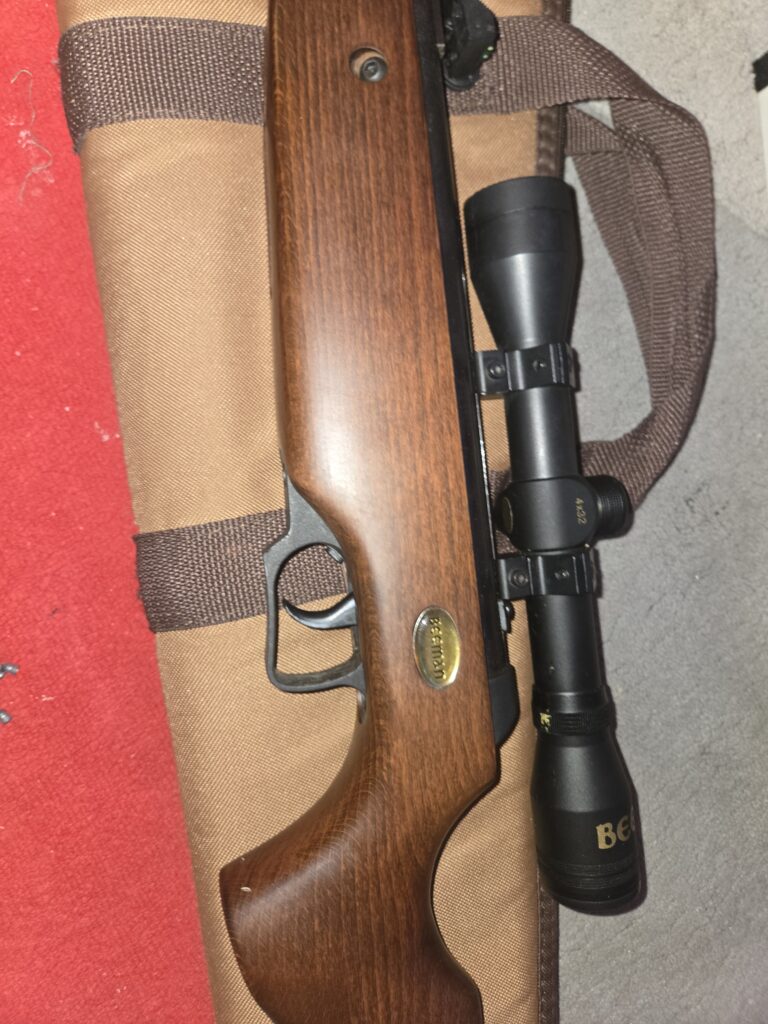
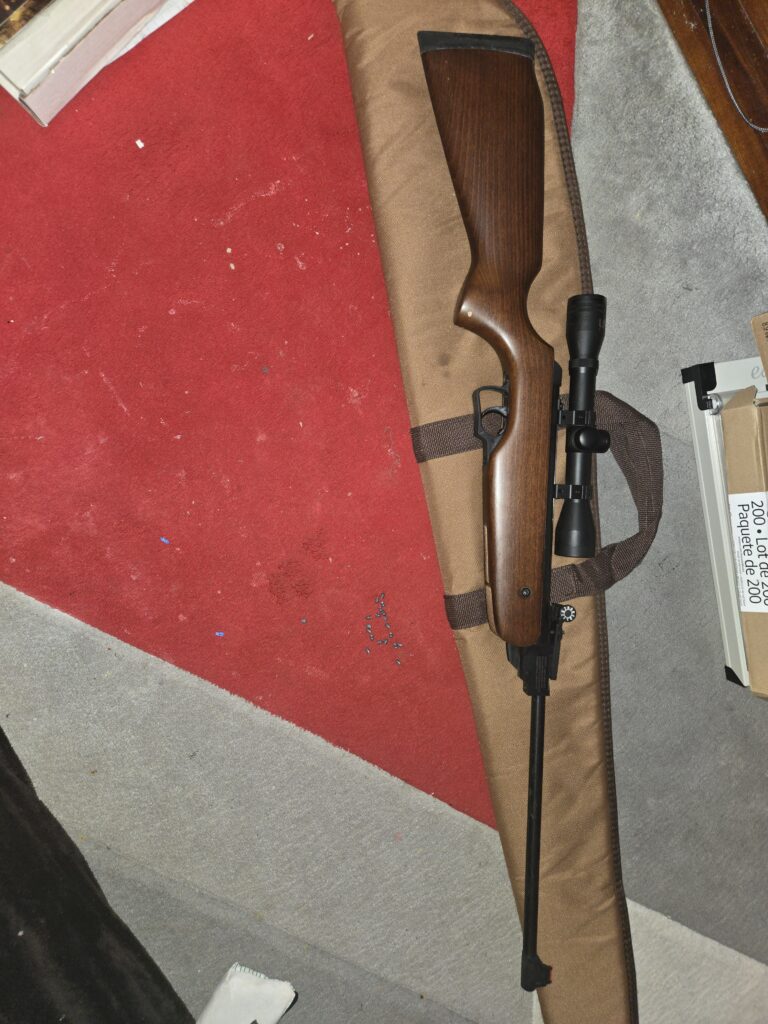
The rifle shown throughout this article—a wood-stocked Beeman spring-piston air rifle—is exactly that kind of tool. It isn’t modern-tactical. It doesn’t rely on electronics, compressed gas cartridges, or detachable magazines. It works because its design has remained largely unchanged for decades.
And that’s not a weakness. That’s the point.
This first article in a three-part series is about understanding the tool itself—what it is, how it works, and how to prepare it correctly before accuracy or field use ever enters the conversation.
Because the truth is simple:
Most people skip this part. And they pay for it later.
Why an Air Rifle Belongs in Bushcraft
Bushcraft is not about firepower. It’s about control.
A good air rifle fits into bushcraft for the same reason hand tools outperform power tools in the wilderness: they are quiet, repeatable, and teach discipline.
A spring-piston air rifle offers several advantages that matter outdoors:
- No external power source
- Minimal noise compared to firearms
- Mechanically simple operation
- Inexpensive, compact ammunition
- Legal accessibility in many regions
- Skill-based accuracy rather than volume of fire
But the most important advantage is subtler.
An air rifle slows you down.
It forces you to think about each shot, each movement, and each decision. That mindset is foundational in survival contexts, where rushed action often causes more problems than it solves.
Understanding the Rifle: What You’re Actually Holding
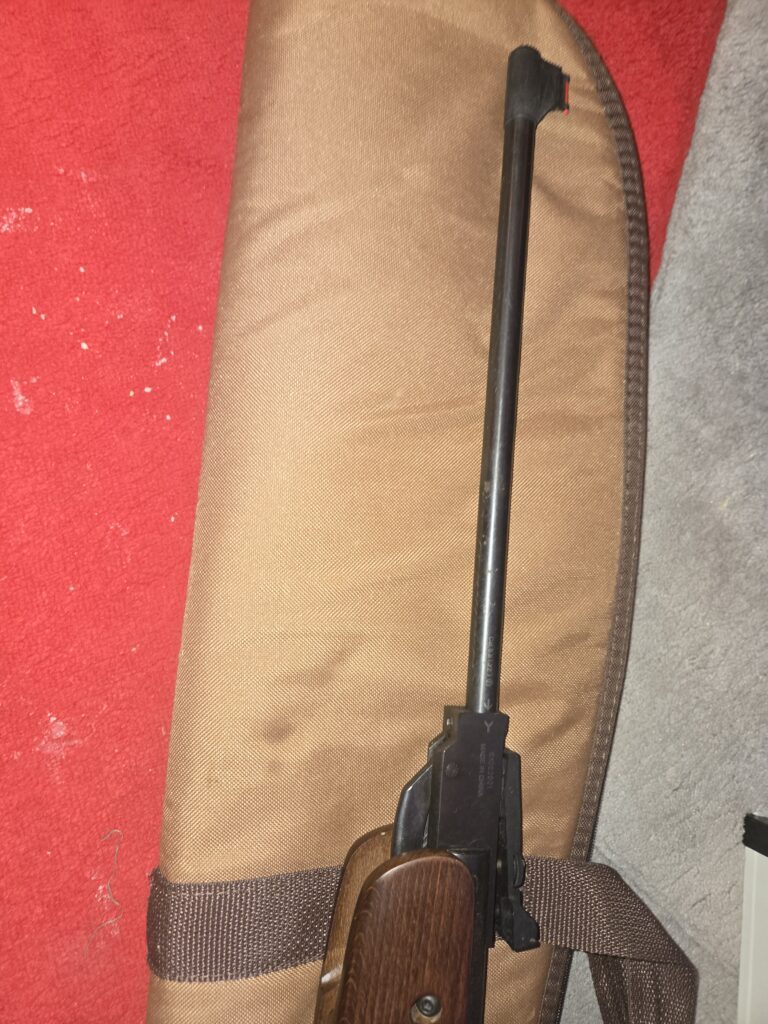
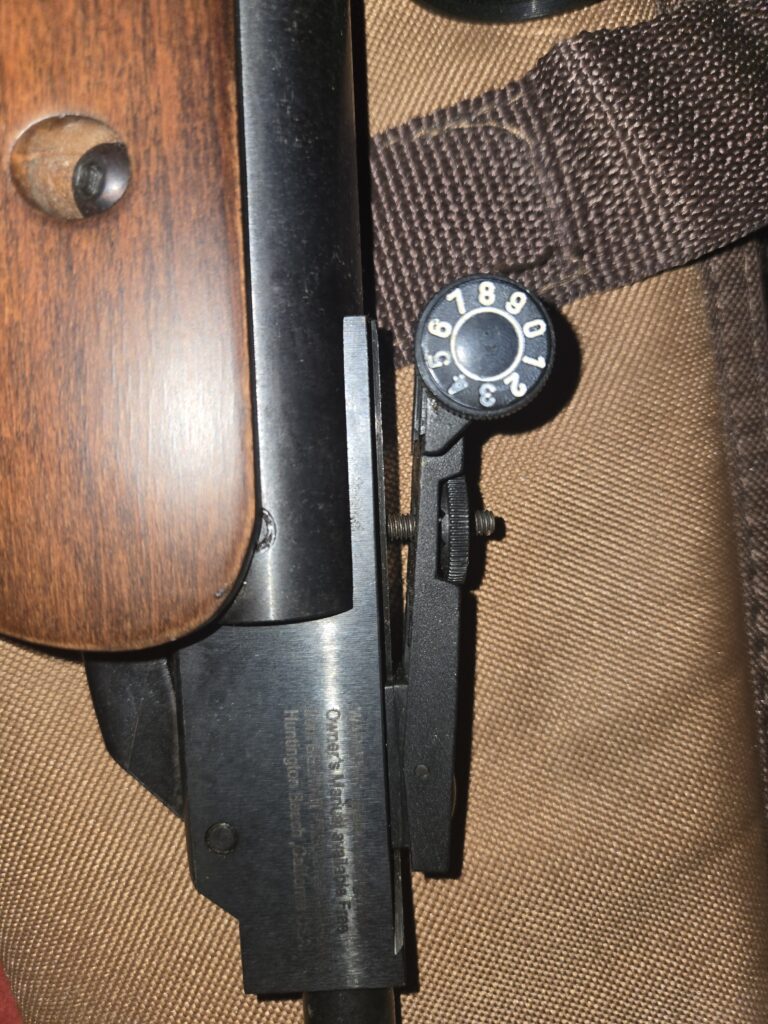
This Beeman rifle is a spring-piston, break-barrel air rifle. Those words matter, because they explain everything about how the rifle behaves.
When you “break” the barrel downward:
- You compress a powerful internal spring and piston
- You cock the trigger mechanism
- You expose the breech for loading a single pellet
When the barrel is returned to its closed position, the system is sealed and under tension. Pulling the trigger releases the piston forward, compressing air and propelling the pellet down the barrel.
There is no magazine.
There is no pump reservoir.
There is no CO₂ cartridge.
One shot. One cycle. One decision.
That simplicity is the reason spring-piston rifles are still favored by experienced outdoorsmen.
The Wood Stock: More Than Just Looks
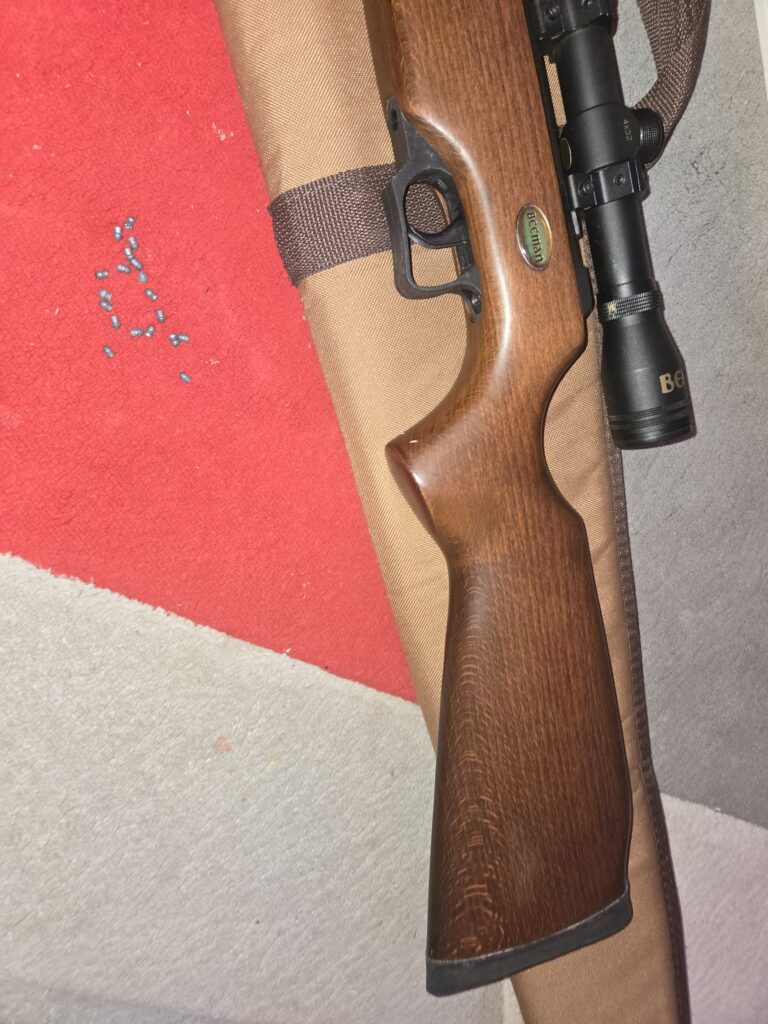
The hardwood stock on your Beeman rifle isn’t decorative—it’s functional.
Wood stocks absorb vibration differently than synthetic stocks. On spring-piston rifles, which produce a unique forward-and-back recoil impulse, this matters.
A well-shaped wood stock provides:
- Better balance
- Natural grip indexing
- Improved recoil harmonics
- Durability in cold conditions
It also encourages correct shooting posture. When a rifle feels natural in the hands, the shooter stops fighting it.
Ammunition: Understanding the Pellets You’re Using
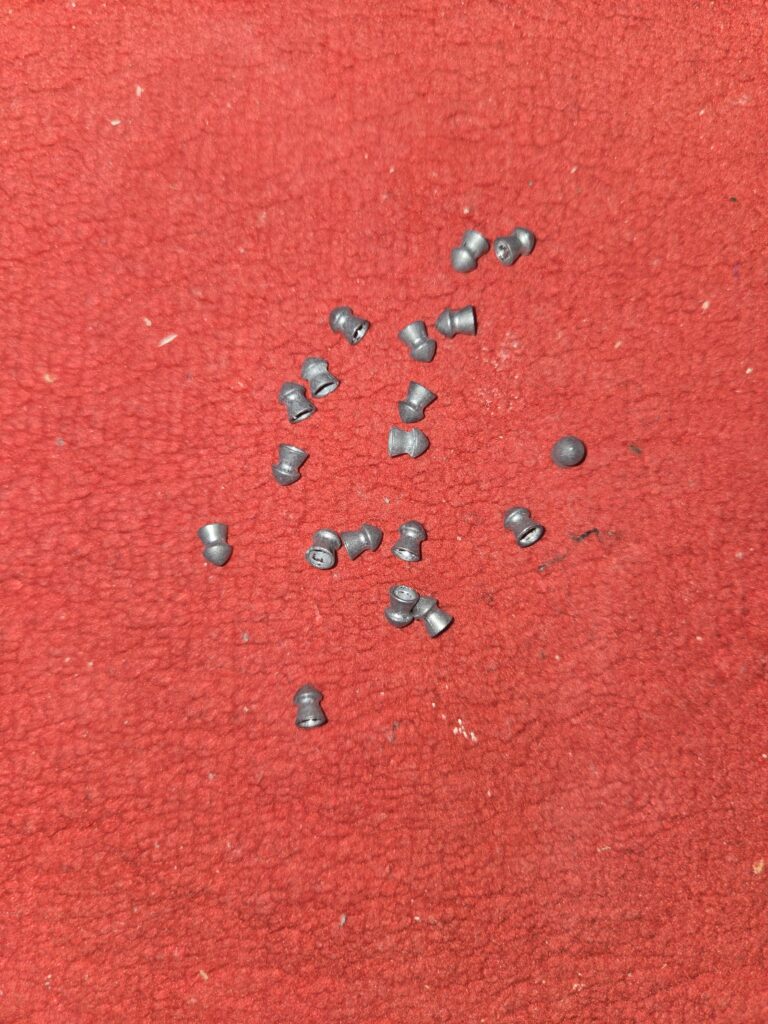
The pellets shown in your photos are classic diabolo-style lead pellets, almost certainly .177 caliber. This is the most common and versatile air-rifle caliber available.
For bushcraft and practice purposes, lead pellets offer several advantages:
- They seal the bore efficiently
- They are forgiving in spring-piston systems
- They provide consistent velocity
- They are widely available and affordable
A critical point many beginners miss is this:
Your rifle does not adapt to your pellet choice.
You must adapt your shooting to the pellet you choose.
That’s why consistency matters more than brand.
While preparing your rifle, commit to one pellet type and stay with it until your fundamentals are solid.
Safety Rituals: The Foundation of Competence
Before accuracy, before optics, before field use—there is preparation.
And preparation starts with habits.
Every time you handle the rifle, the same steps apply:
- Treat the rifle as if it is loaded
- Break the barrel fully and inspect the breech
- Keep fingers off the trigger until ready
- Maintain muzzle awareness at all times
Spring-piston rifles deserve special respect because they remain under mechanical tension once cocked. There is no manual safety that replaces awareness.
Good bushcraft isn’t about memorizing rules.
It’s about repeating rituals until they become automatic.
Inspecting and Preparing the Rifle
Before any serious shooting session, inspect the rifle deliberately.
Check the Following:
- Stock screws – Spring rifles vibrate; loose screws affect accuracy
- Scope mounts – Even tight mounts can walk over time
- Barrel lockup – The barrel should close firmly and consistently
- Trigger feel – Smooth and predictable, not gritty or inconsistent
Avoid adding oil to the compression chamber. Petroleum-based oils inside spring-piston systems can cause dangerous pressure spikes and internal damage.
If the rifle is clean, dry, and secure, leave it that way.
Understanding the Optic (Without Adjusting It Yet)
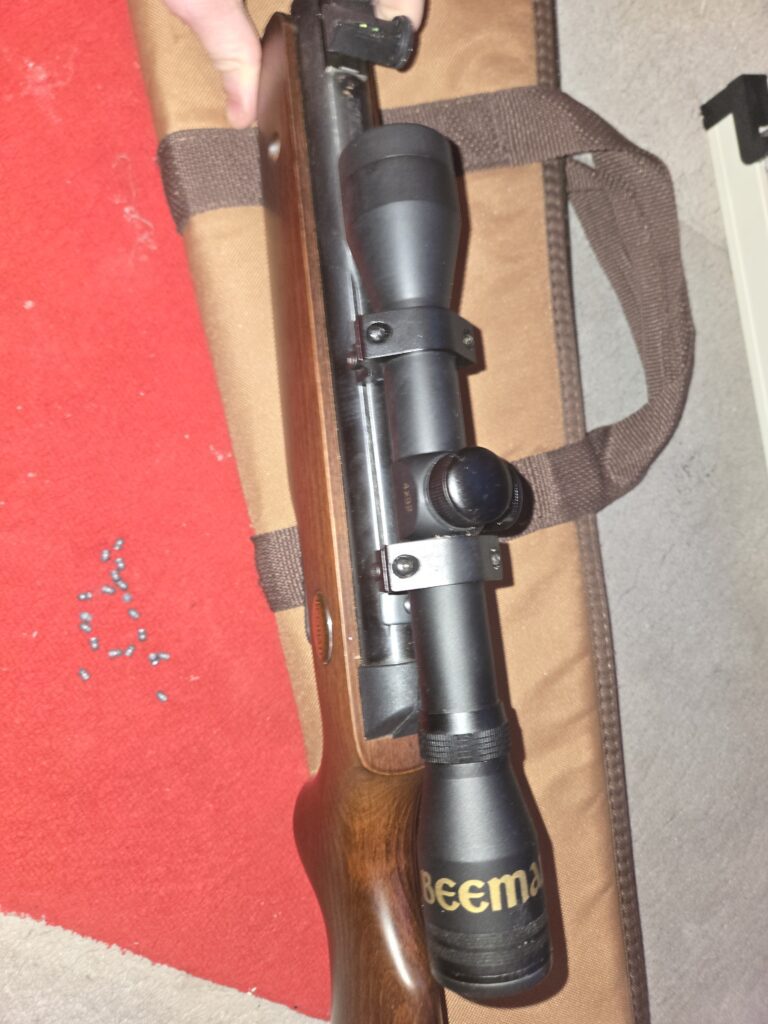
(Insert photo of scope mounted on rifle)
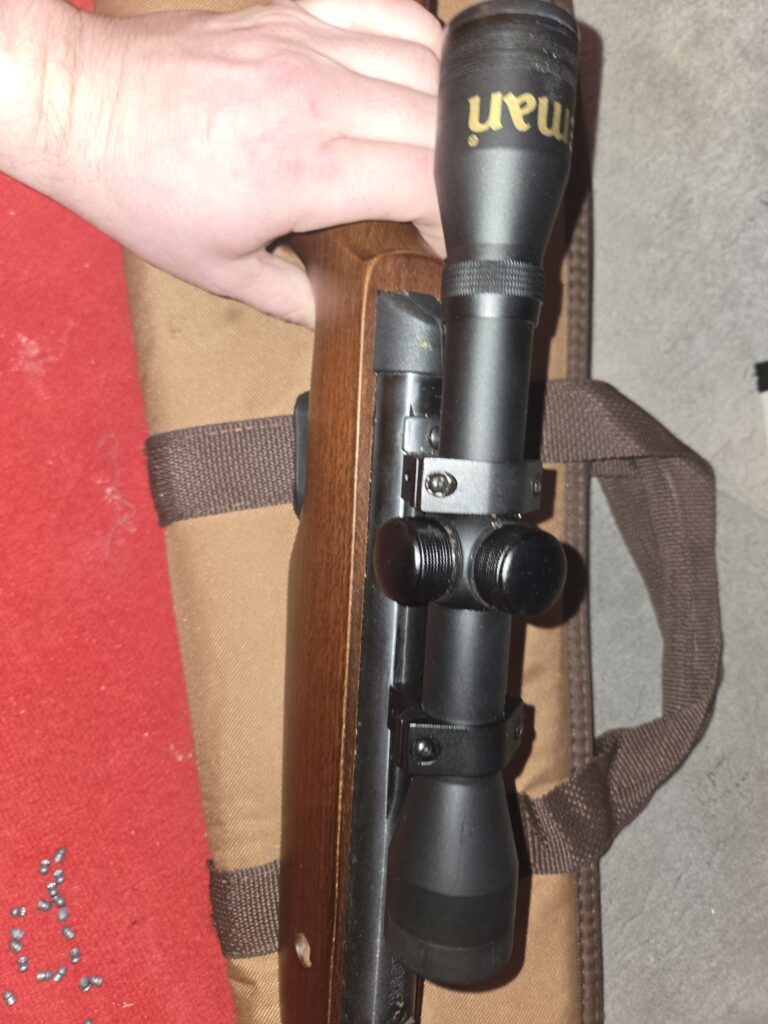
Your rifle is equipped with a basic hunting scope—appropriate for air-rifle distances and bushcraft use.
At this stage, do not adjust anything yet.
Part 1 is about preparation, not zeroing. What matters now is understanding what the scope is—and what it isn’t.
Air-rifle scopes are not firearm scopes in behavior. Spring-piston recoil is unique, and cheap or poorly mounted optics fail quickly under it.
For now:
- Confirm the scope is secure
- Ensure eye relief feels comfortable
- Confirm the reticle is upright and not canted
Actual sighting and adjustment will be covered fully in Part 2.
Why Single-Shot Rifles Teach Better Habits
One of the most overlooked advantages of your Beeman rifle is that it only fires one pellet at a time.
This creates natural discipline:
- You cannot rush reloads
- You must commit to each shot
- You naturally slow your breathing
- You think before firing
In bushcraft, restraint is a skill.
A tool that enforces restraint is worth keeping.
Storage, Transport, and Care
When the session is over:
- Store the rifle uncocked
- Wipe down metal surfaces to remove moisture
- Keep pellets sealed and dry
- Avoid prolonged pressure on the barrel
Spring-piston rifles reward respect. Neglect shortens their life.
Closing Thoughts: Why This Rifle Earns Its Place
A Beeman air rifle like this doesn’t make you a marksman.
It reveals whether you are one.
It magnifies mistakes. It rewards patience. It teaches consistency. And those qualities extend far beyond shooting—they’re foundational to bushcraft itself.
In the next article, we’ll move into accuracy and control—how to sight in this rifle properly, how to use the scope without frustration, and how to shoot it the way it was designed to be shot.
For now, preparation is enough.
wow good stuff