
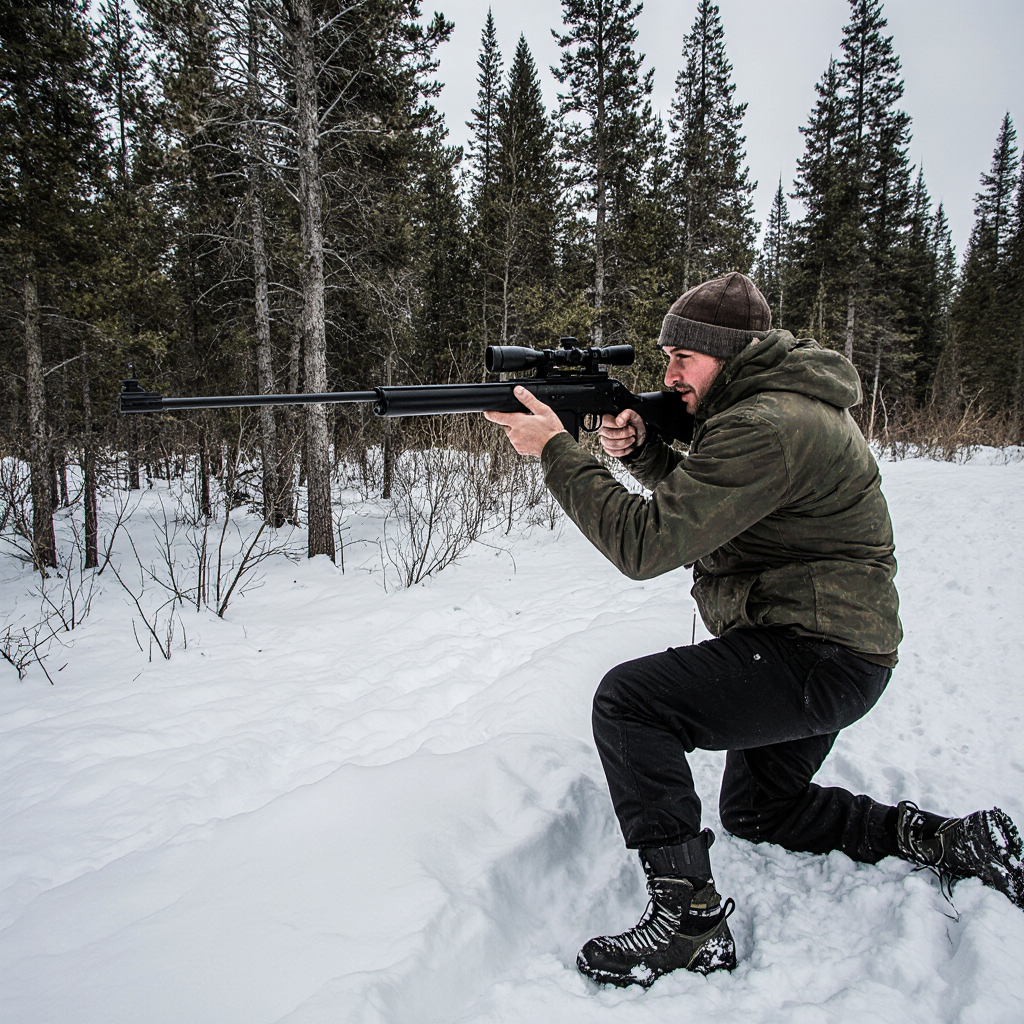
Zeroed, Not Rushed: How to Sight In a Spring-Piston Air Rifle Correctly
Accuracy with a spring-piston air rifle doesn’t come from force or speed. It comes from understanding how the rifle moves, how the shooter interferes with that movement, and how patience removes both problems at once.
Many people approach air rifles as if they are underpowered firearms. That assumption leads to frustration almost immediately. A spring-piston rifle behaves differently, recoils differently, and demands a different kind of respect. Once you accept that, sighting in stops being a struggle and starts becoming a conversation between you and the rifle.
This article is about learning how to have that conversation calmly.
Why Spring-Piston Rifles Feel “Unforgiving”
When you pull the trigger on a spring-piston rifle like your Beeman, a chain of events happens before the pellet ever leaves the barrel. The internal piston accelerates forward, the rifle reacts backward, the piston abruptly stops, and the rifle then moves forward again. This all happens in a fraction of a second—but it matters.
Because the pellet is still traveling down the barrel during this movement, anything you do to interfere—gripping too tightly, bracing the rifle too hard, or forcing a rigid shooting position—changes the pellet’s point of impact.
This is why spring-piston rifles expose bad habits so quickly. They don’t tolerate tension. They reward neutrality.
Once you understand this, the rest of the sight-in process makes sense.
Understanding the Scope Without Overthinking It
Your scope has two adjustment knobs: one controls elevation (up and down), and the other controls windage (left and right). These knobs do not change where the pellet goes. They change where the reticle appears in relation to where the pellet already lands.
That distinction is important, because many beginners try to “chase” the bullseye instead of letting the rifle show them a pattern.
A simple way to think about it is this:
You fire the rifle, observe where the pellets group, and then move the reticle to that group. Not the other way around.
If your pellets are landing low, you adjust the reticle upward. If they’re landing right, you move the reticle left. The markings on the scope body can help, but the target tells the truth.
Choosing a Sensible Zero Distance
One of the most common mistakes is starting too far away.
At longer distances, every small inconsistency in grip, breathing, or support gets magnified. That makes it difficult to tell whether your problem is the rifle, the scope, or the shooter.
For spring-piston air rifles, the best place to begin is close and controlled.
A distance of around 10 yards is ideal for initial zeroing. At this range, the pellet’s behavior is predictable, and adjustments have a clear, visible effect. Once the rifle is zeroed here, extending the distance later becomes straightforward.
There’s no prize for starting far away. Accuracy grows outward, not inward.
Supporting the Rifle the Right Way
When sighting in, stability is important—but rigidity is not.
Hard surfaces like concrete benches, metal rails, or tightly clamped rests transmit vibration directly back into the rifle. Spring-piston rifles don’t like that. They need to move.
A soft support—a backpack, a rolled jacket, or a padded shooting bag—absorbs vibration and allows the rifle to recoil naturally. Rest the fore-end gently, without forcing it into place. The goal is repeatability, not restraint.
Think of the rifle as something you’re allowing to perform, not something you’re controlling.
The Artillery Hold, Without the Mythology
You’ll often hear about the “artillery hold” with spring-piston rifles. At its core, it’s simply a relaxed way of letting the rifle behave the same way every time.
Your support hand should be open, palm up, with the rifle resting lightly rather than being gripped. Your shoulder contact should be consistent but gentle. Your cheek should come to the stock naturally, without pressing hard or craning your neck.
What matters most is that your hold is the same for every shot.
If the rifle recoils the same way every time, the pellet leaves the barrel the same way every time. That’s where accuracy comes from.
Shooting Groups, Not Single Shots
When sighting in, never adjust your scope based on a single shot. One pellet doesn’t tell you anything meaningful.
Instead, fire a small group—three to five shots—aiming at the exact same point each time. Ignore the occasional flyer and focus on where most of the pellets land together.
That cluster is the rifle speaking clearly.
Make a small adjustment, then fire another group. Let the rifle settle. Rushing this step creates more work later.
Breathing, Trigger Control, and Follow-Through
Accuracy isn’t forced; it’s timed.
Take a breath, let it out naturally, and pause at the bottom of the exhale. Apply steady pressure to the trigger—no jerking, no anticipation. When the shot breaks, stay in position. Don’t lift your head. Don’t immediately look for the impact.
Follow-through matters because the pellet is still traveling while the rifle is moving. Ending the shot calmly ensures nothing changes at the last moment.
Knowing When to Stop Adjusting
There comes a point where the rifle is doing its job and further adjustments only introduce confusion.
You’ll know you’re there when your groups are tight, repeatable, and predictable. They don’t need to be perfect. They need to be consistent.
Once you reach that point, stop adjusting. Learn the rifle where it is. Confidence comes from familiarity, not endless tweaking.
Closing Thoughts
Sighting in a spring-piston air rifle is not a test of mechanical skill—it’s a test of patience. The rifle doesn’t need to be dominated. It needs to be understood.
If you slow down, relax your grip, and let patterns reveal themselves, the rifle will reward you with accuracy that feels earned rather than forced.
In Part 3, we’ll take that accuracy into the field—covering carry methods, deliberate loading, ethical shot selection, and the mindset required when every shot truly counts.