
My 2026 Backyard Garden Update: Growing More Food With Rows, Leaves, Raised Beds, and Trial-and-Error
By early July, a garden starts revealing what it really is.
In spring, nearly every garden looks hopeful because the weeds are small, the rows are fresh, and every seed packet feels full of potential. By July, the weak spots begin showing themselves. The grass starts pushing into the beds, crops compete for space, tomato plants turn into jungles, and you find out whether your soil, watering habits, layout, and planting choices are actually working together.
My 2026 garden is not a perfectly manicured display garden. It is a working attempt to grow a meaningful share of my own produce, save some money on groceries, learn what grows well in my space, and eventually have enough extra food to give fresh vegetables to friends and family when they visit.
The goal is not total self-sufficiency overnight. That is a huge target requiring storage space, preservation systems, crop planning, soil improvement, and years of experience. My goal is more practical: build a garden that produces enough cucumbers, tomatoes, greens, roots, peppers, and other vegetables that the harvest actually matters.
Garden Update at a Glance
This year’s garden is built around a mix of in-ground planting rows, leaf-covered walking paths, low-cost raised beds, containers, and fence-line growing space.
The main elements include:
- Paired planting rows separated by leaf-mulched paths
- Tomatoes companion planted with basil
- Cucumbers planted along the chain-link fence
- Carrots, beets, radishes, onions, lettuce, potatoes, corn, pumpkins, squash, and watermelon
- Raised beds with peppers, cucumbers, peanuts, lettuce, tomato seedlings, and experimental plants
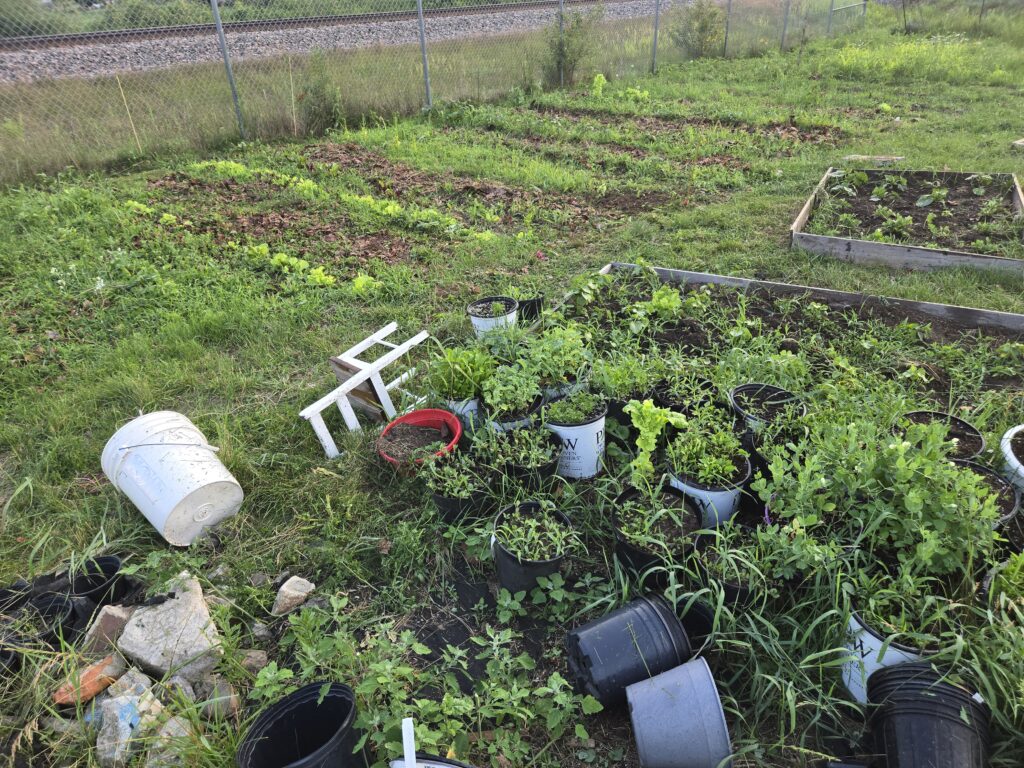
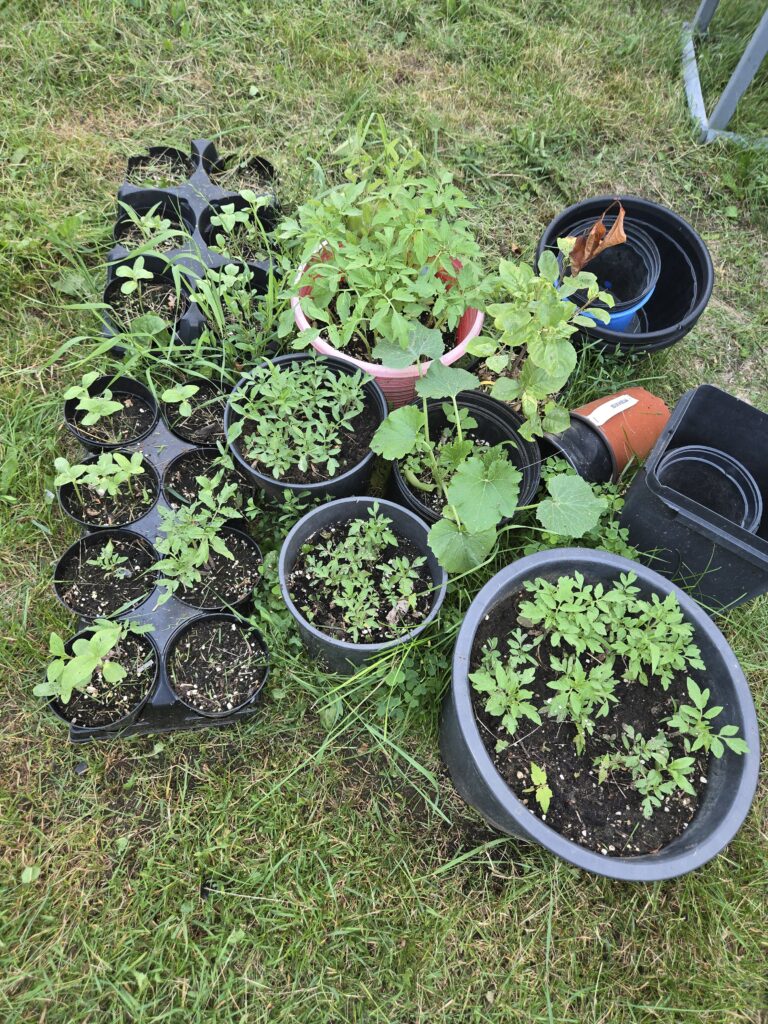
- Containers functioning as an overflow nursery and extra growing space
- A continuing battle with grass and weeds
The garden is still rough around the edges, but that does not mean it is failing. It means it is being built while it grows.
Why I Wanted a Bigger Food Garden This Year
I have always liked the idea of being able to walk outside, pick food, and bring it into the kitchen. There is something different about eating a cucumber or tomato that grew a few steps from your door. It is not just the taste, although homegrown vegetables often do taste better. It is the fact that you planted it, watched it develop, protected it from weeds, watered it during dry stretches, and eventually turned a small seed into something useful.
This year, I wanted to make a more serious attempt at growing food. Not just a few plants in a small raised bed, but a garden with enough scale that it could produce a real harvest. I want cucumbers for eating fresh, tomatoes for salads and sauces, lettuce for regular meals, and root vegetables that could potentially be preserved or stored for later.
There is also a social side to it. A productive garden gives you something worthwhile to share. When people come over, it is nice to be able to send them home with vegetables. When visiting family or friends, bringing fresh cucumbers, tomatoes, beets, or greens from the garden feels better than showing up empty-handed.
The garden is also part of learning resilience. Grocery prices are not likely to become less important to households anytime soon, and growing even part of your own produce gives you more control. A garden will not replace a grocery store in one season, but it can reduce dependence on it and teach skills that become more valuable every year.
The Paired-Row Layout and Leaf-Mulch Paths
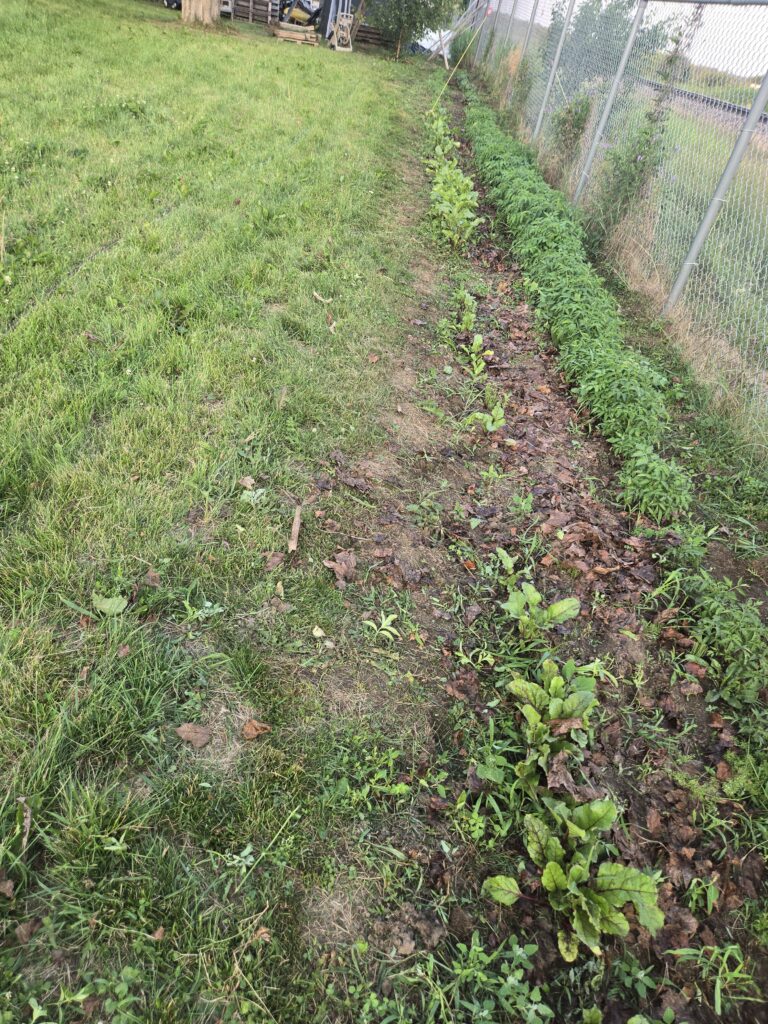
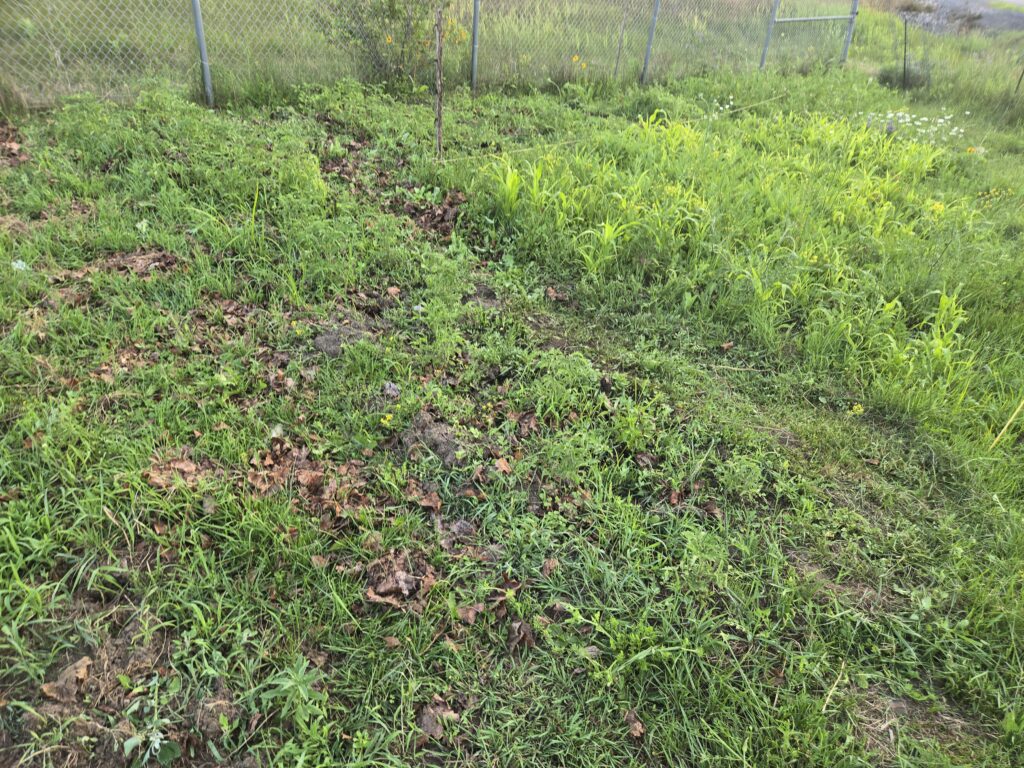
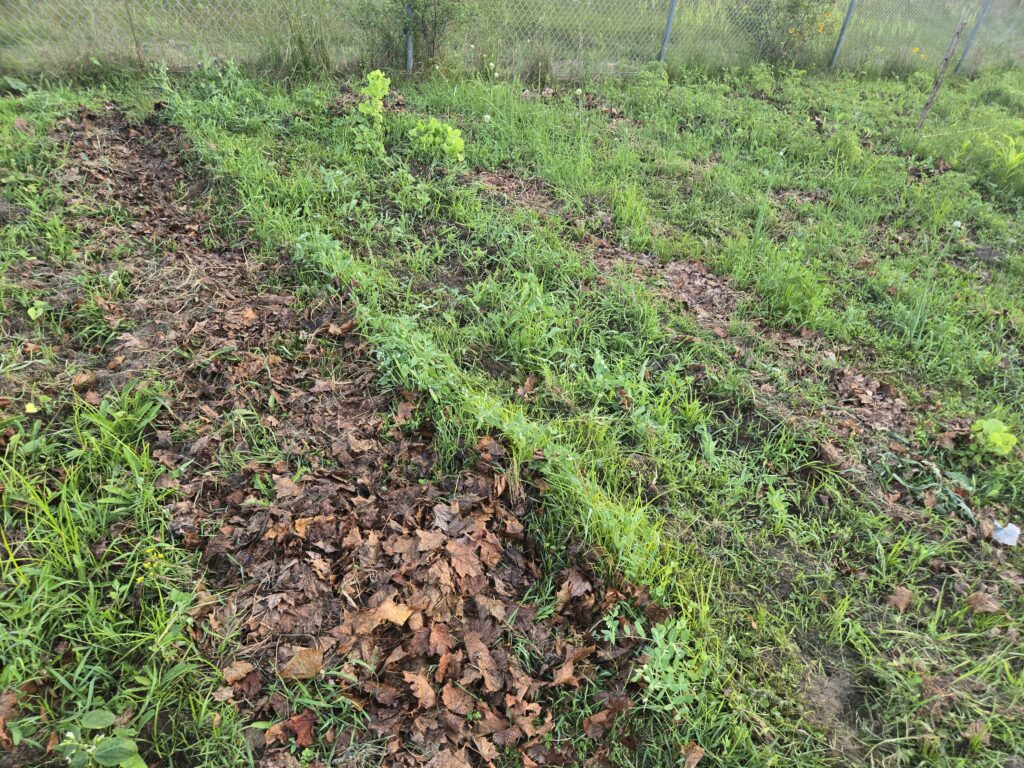
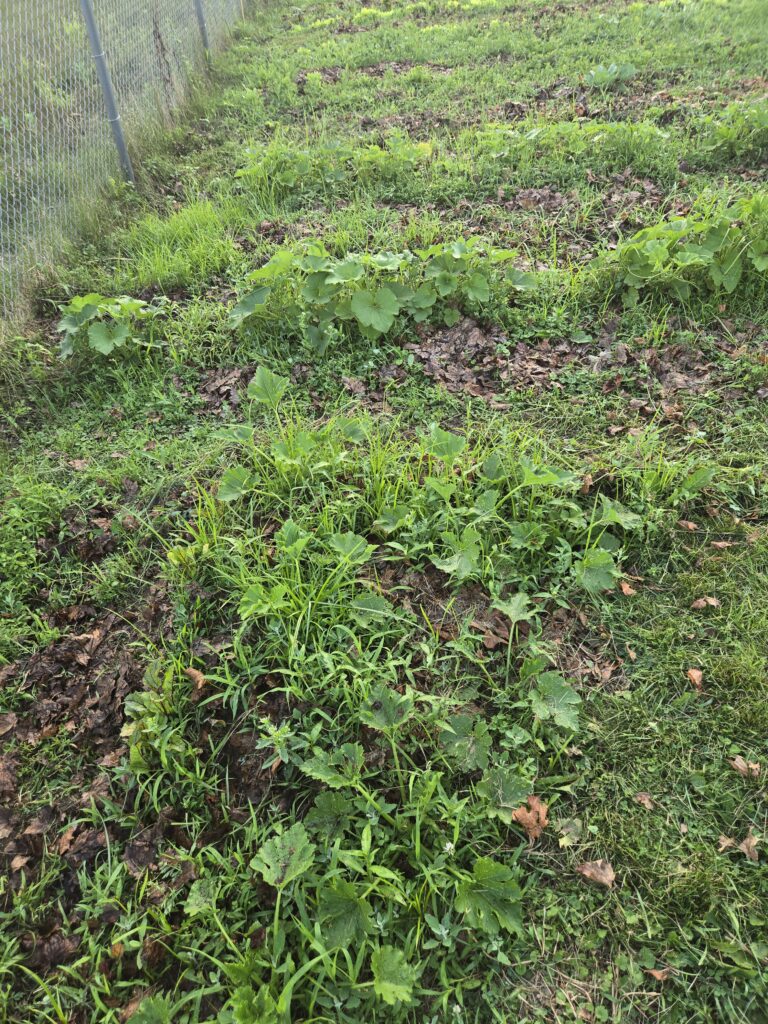
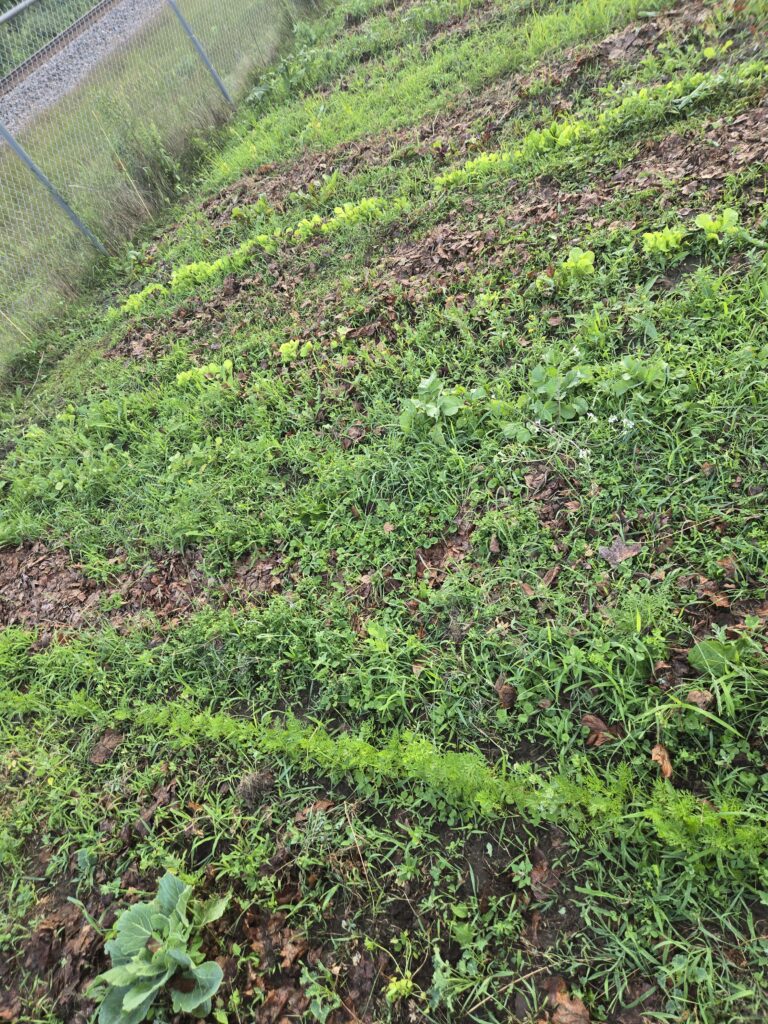
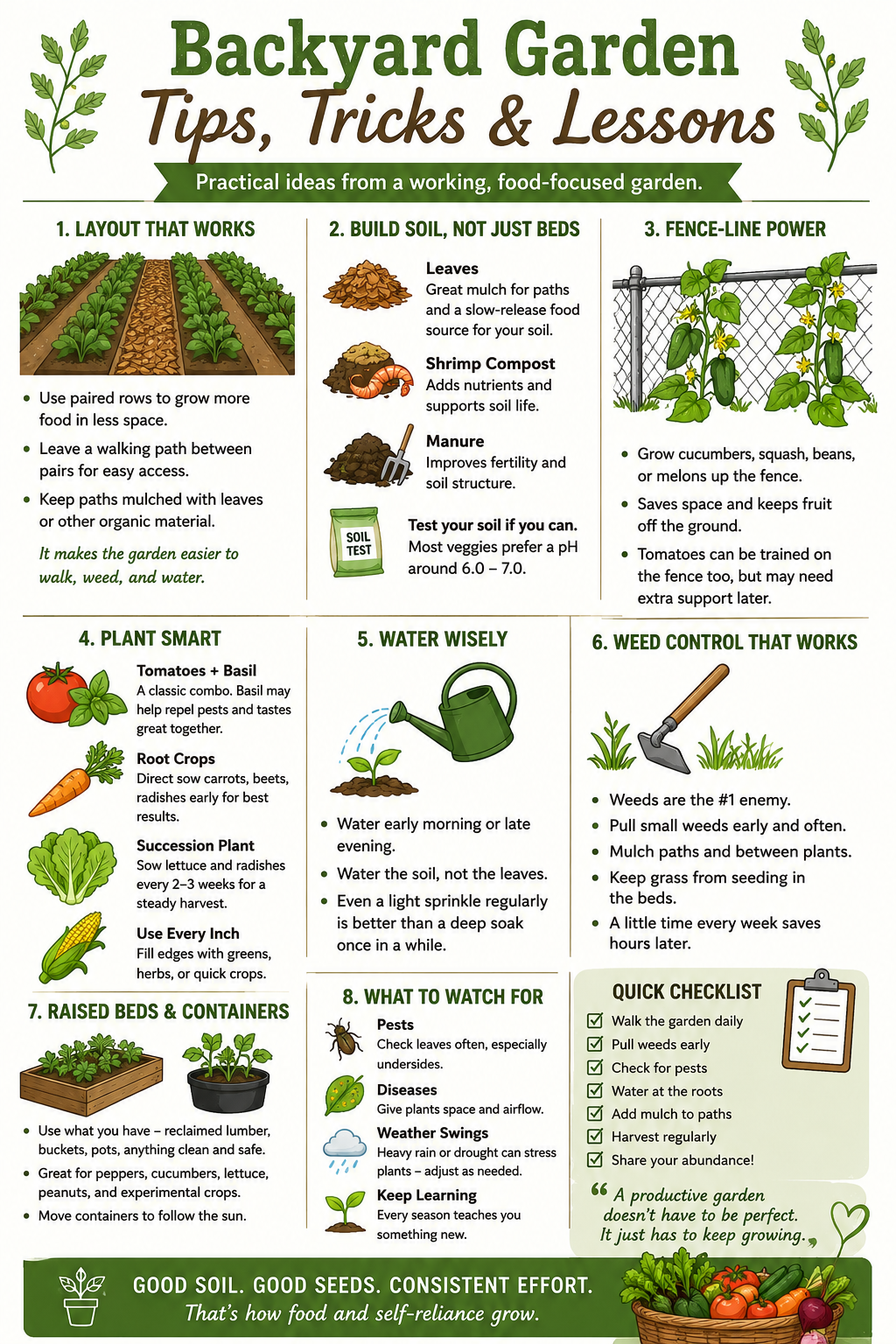
The main in-ground section uses a simple paired-row system. Instead of planting one long row and then leaving a large empty gap, I planted two crop rows together, followed by a walking path, then another pair of rows. That pattern repeats through the growing area.
The idea behind the layout was practical. The paths make it easier to walk through the garden without stepping on planting soil, reach crops for watering and weeding, and keep the space from turning into one large unorganized patch. The paired rows also help concentrate the growing area while still leaving access lanes for maintenance.
Last year’s leaves became part of the system. I spread them along many of the walking paths between the crop rows. The leaves are not decorative. They are there to help define the paths, reduce mud, hold some moisture in the soil, suppress at least part of the weed pressure, and slowly contribute organic material as they break down.
Mulch is not magic, especially when grass is already established and aggressive. But organic materials such as leaves, compost, and manure are useful tools for building soil structure and organic matter over time. Ontario’s soil-health guidance specifically recognizes manure, compost, and other organic materials as ways to support soil organic matter and soil structure.
The leaves have not eliminated weeds. The photos make that obvious. But they have helped create a working layout, and that matters. A garden system does not need to be perfect on day one. It needs to be usable enough that you can keep improving it instead of getting discouraged and abandoning it.
What I Am Growing in the Main Garden
The garden has a wide mix of crops because I wanted to maximize what the space could produce. Some rows are clearly planned, while others are more experimental. That is part of the fun and part of the risk of growing a large mixed garden.
The main in-ground rows include pumpkins, squash, small watermelon plants, carrots, beets, radishes, onions, lettuce, cauliflower, mixed brassica-type plants, corn, tomatoes, basil, and potatoes. The potatoes are planted toward the back area near the fence line and railroad side of the property.
The watermelon is still very small and is one of the crops I am watching closely. Watermelon can be demanding in a short-season climate, especially when plants start slowly or face early competition from weeds. I am not writing it off yet, but it is definitely one of the experiments that may or may not pay off this year.
Carrots, beets, and radishes are especially important to me because they have been difficult in past seasons. Small seedlings can easily disappear into grass and weeds before they have a chance to establish. This year, they appear to be doing better, which is encouraging. Even modest success with root crops is meaningful when they were previously getting overwhelmed.
The onion section is another attempt to create a larger practical harvest rather than just planting a handful of novelty vegetables. Onions are useful in nearly every kitchen, and a dedicated section gives them a better chance of becoming a real crop instead of an afterthought.
Tomatoes and Basil: A Dense Companion-Planting Experiment
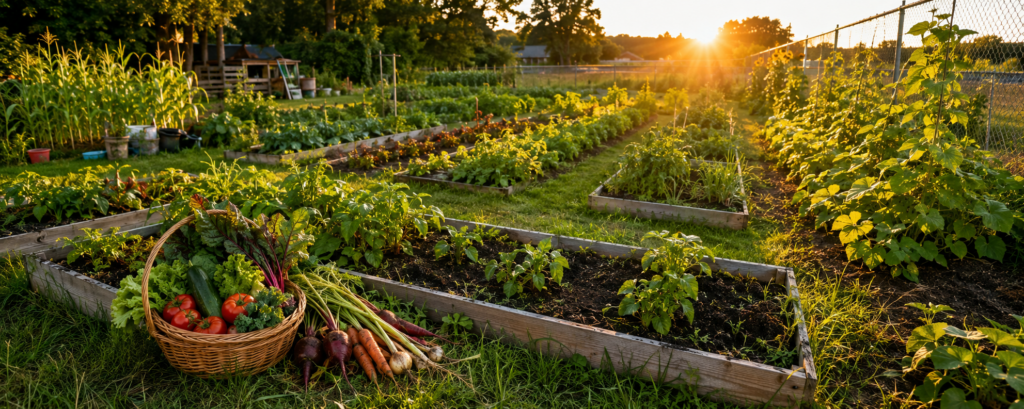
One of the areas I am happiest with so far is the tomato section near the fence. Rather than carefully spacing every tomato plant according to a strict chart, I planted tomatoes more densely and mixed basil among them. The result is a bushy, green patch that already looks more established than some other parts of the garden.
Tomatoes and basil are often planted together in home gardens because they share similar warmth and sun preferences, and because basil is useful around tomatoes in the kitchen. In this garden, the combination is also about making efficient use of space. The basil fills lower gaps while the tomatoes build upward growth.
This is not a conventional commercial-style tomato layout, and I am fine with that. I am testing how much food I can produce in a limited space while learning which systems work best in my own garden. Dense planting can create more shade, more competition, and less air movement, but it can also turn an otherwise bare patch into a productive growing zone.
The important thing will be watching the plants as summer progresses. Tomato plants benefit from support, good airflow, and watering that reaches the root zone rather than constantly wetting the foliage. Staking or caging, keeping weeds down, and avoiding overcrowded wet leaves can help reduce disease pressure as the canopy fills in.
I may end up adding more support later in the season. The fence can help, but tomatoes can become heavy, especially if they produce well. Twine, stakes, cages, or simple homemade supports may be needed to keep plants from collapsing under their own weight.
Fence-Line Cucumbers and Vertical Growing
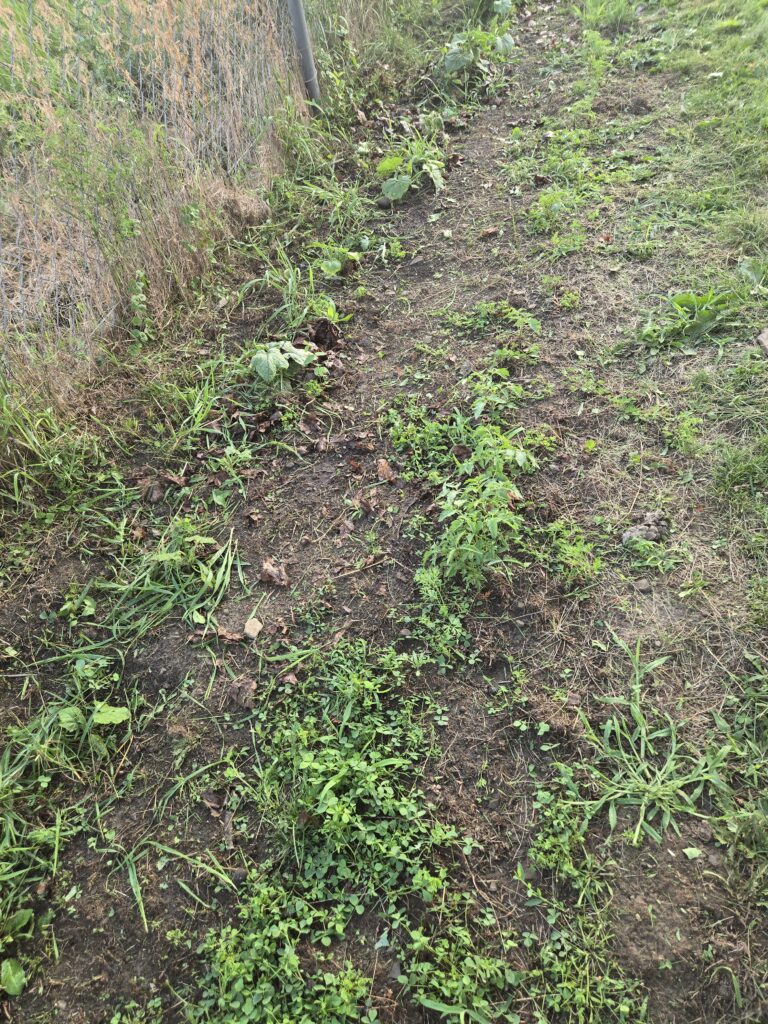
The chain-link fence is one of the most useful structures in the garden. Instead of treating it as a boundary only, I am using it as a potential growing surface for cucumbers and some tomatoes.
The cucumber plants are positioned along the fence with the hope that they will climb upward as they grow. Cucumbers naturally want to vine, and training them vertically can keep fruit cleaner, improve access for harvesting, and make better use of a narrow strip of garden space. Trellising is commonly used for cucumbers, squash, and melons because it can keep fruit off the ground and make growing areas more efficient.
There are also cucumbers in some raised beds, where I may add trellises later. That will probably become necessary if the plants take off. A simple wood frame, cattle panel section, string trellis, or even sturdy garden netting can keep cucumber vines from running everywhere.
The fence-line planting is one of my favorite ideas in this garden because it turns a difficult edge area into productive space. Instead of wasting the strip beside the fence, I can grow vertically and let the plants use the structure that is already there.
Raised Beds, Containers, and the “Use What You Have” System
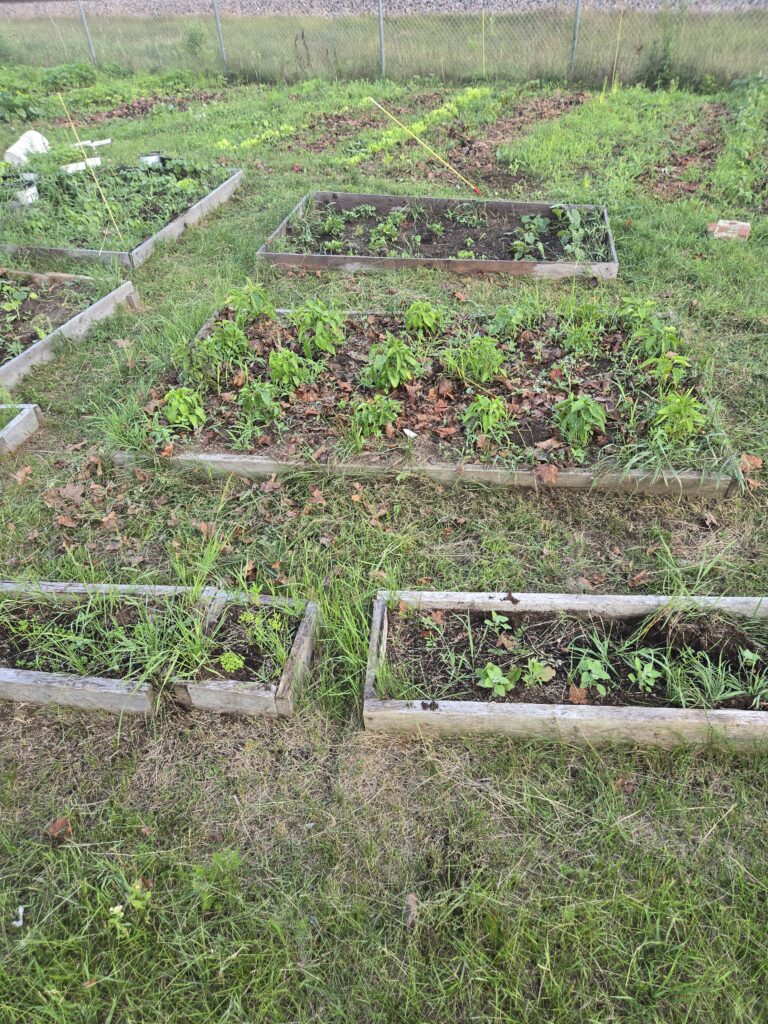
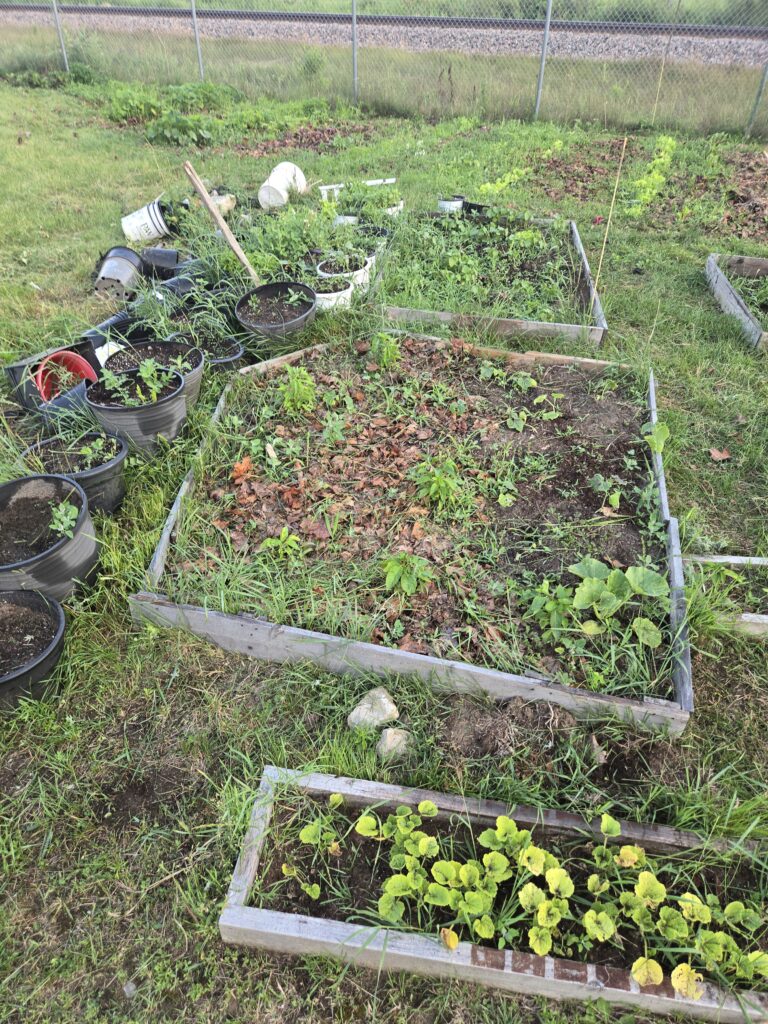
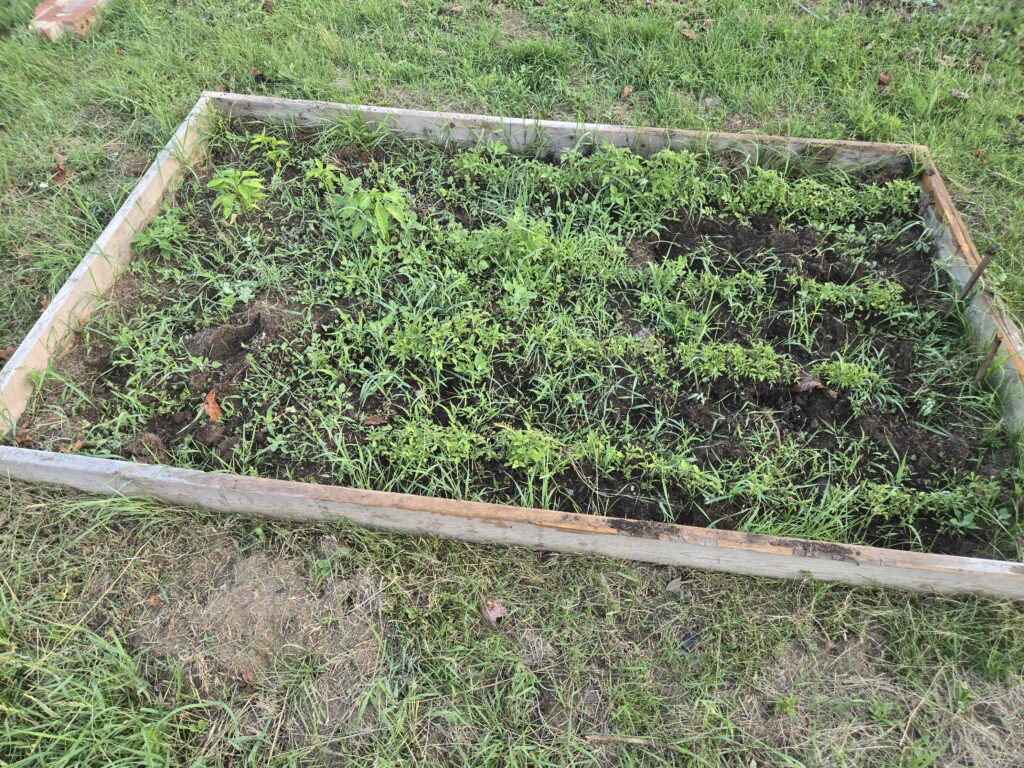
The raised beds are not fancy. They are built from reclaimed or low-cost lumber, and some are rougher than others. But they work.
That is an important point for anyone who thinks they need expensive cedar beds, perfect soil blends, matching pots, and a professionally designed backyard before they can grow food. You do not. Better materials are nice, but productive gardening often starts with whatever boards, containers, soil, buckets, and space are available.
The raised beds currently hold a mix of pepper plants, cucumbers, lettuce, tomatoes, peanuts, and other experiments. Some of the peppers are unusual varieties that came from a local Seeds Saturday event. I do not even have every variety name memorized, but that is part of the experiment. Growing unfamiliar peppers gives me a chance to discover what performs well, what tastes good, and what deserves a spot next year.
The containers are also doing more than one job. They are holding seedlings, overflow plants, extra tomatoes, young cucumbers, and other plants that did not fit neatly into the main rows. A container garden may look chaotic from a distance, but it can be useful because pots are movable. If a plant needs more sun, more protection, or better access to watering, a pot gives you options.
Building the Soil as I Go
The raised beds received more attention than the main garden soil this year. I added shrimp compost, manure, peat moss, and some fertilizer to the raised-bed areas. The peat moss was used partly because I suspected the soil might be too alkaline and wanted to make the mix more suitable for vegetables.
That is still something I want to test rather than assume. Most vegetables generally perform best in slightly acidic to neutral soil, often around a pH of roughly 6.0 to 7.0, but guessing at soil pH is not as reliable as testing it. A simple soil test would help me understand whether the raised beds actually need pH adjustment, more nutrients, or simply more organic matter.
The main in-ground garden received less soil preparation. I tilled the area, planted it, and added a light fertilizer application around some seedlings. It is not a deeply amended market-garden bed system yet. But that is part of the long-term project: grow food now while gradually improving the soil every season.
This is where the leaf paths, compost, manure, plant residue, and future mulch layers matter. Soil building is slow. The first year is often about getting plants established. The next few years are where the real system starts to develop as organic matter increases, soil life improves, and the garden becomes easier to manage.
What Is Doing Well So Far
The tomato plants are one of the biggest positives. The dense tomato-and-basil area is bushy, green, and clearly establishing itself. That section feels like proof that the garden can produce strongly even when the layout is not perfectly conventional.
The cucumbers are another bright spot. They are one of the crops I care about most because I love eating them fresh, and they are easy to share. A good cucumber harvest would make the whole season feel worthwhile.
The peppers in the raised beds are also promising. They look healthier than some of the more weed-pressured in-ground crops, which makes sense because raised beds are easier to control and received more soil improvement. The exotic pepper seedlings may end up being some of the most interesting harvests of the year.
I am also proud of the carrots and beets. They are still small, but they are present and growing. That might sound minor, but anyone who has watched root-crop seedlings vanish into grass knows that simply getting them established is a win.
The Main Challenge: Weeds and Grass
The biggest enemy in this garden is not lack of effort. It is grass and weeds.
Weeds compete with vegetables for water, nutrients, sunlight, and root space. Grass is especially frustrating because it can creep into rows from the edges, regrow after trimming, and make small seedlings hard to find. The garden has plenty of areas where the crops are visible, but so is the competition.
My current approach is mostly manual. I hand-pull weeds, use a whipper snipper around areas where it is safe, and try to keep grass from swallowing the vegetables. That is not glamorous work, but it is one of the realities of growing food on a larger scale without heavy plastic mulch, herbicides, or a fully built no-till system.
The lesson so far is that a garden needs maintenance routes. The leaf paths help, but I will likely need thicker mulch, more defined edges, and more regular weeding windows next season. Weeds are easier to manage when they are small. Letting them gain height and root mass turns a ten-minute task into a multi-hour project.
What I Hope to Harvest and Preserve
The crops I want most are cucumbers and tomatoes. Those are the vegetables I know I will use, enjoy, and give away. A big cucumber harvest means fresh snacks, salads, sandwiches, and the possibility of pickling. A big tomato harvest means salads, sauces, sandwiches, and potentially preserved tomatoes later in the season.
Beets and radishes are also on the list. I would like to put away at least a few jars of preserved vegetables for winter. Even a small amount of home-preserved food would make the garden feel more connected to a larger homesteading goal rather than being only a summer hobby.
There are also potatoes, onions, peppers, lettuce, squash, pumpkins, corn, carrots, and whatever surprises come from the experimental sections. Some crops may perform well, while others may struggle. That is normal. The point is to learn which vegetables are worth expanding next season and which ones need a better system.
What This Garden Is Teaching Me
The biggest lesson from the 2026 garden is that food production does not need to wait for perfect conditions.
The beds do not all match. The rows are not all perfectly weed-free. Some tomatoes are planted too densely. Some watermelon plants are tiny. The soil is still being improved. The fence-line trellis system is still an experiment. But food is growing.
That matters more than perfection.
A garden like this becomes better through repetition. Every season teaches you which crops deserve more room, which areas need better mulch, where water collects, where weeds invade first, and which varieties are worth growing again. The goal is not to build a flawless garden in one year. The goal is to build a garden that keeps getting more productive, more organized, and more useful.
This season, I am growing vegetables, but I am also growing a system. That system includes paired rows, leaf mulch, raised beds, containers, fence-line growing, direct seeding, home-started seedlings, compost, manure, and plenty of hands-on maintenance. It is imperfect, but it is real—and it is moving in the right direction.
Related External Links
- Ontario’s Agricultural Soil Health and Conservation Strategy — Practical background on building soil organic matter, improving soil structure, and supporting long-term soil health.
- University of Minnesota Extension: Growing Tomatoes in Home Gardens — Helpful guidance on watering, supporting, maintaining, and troubleshooting tomato plants in a home garden.
Definitely not the most picture perfect garden but looks to be functional. Looking forward to seeing it near late July when the plants normally really take off. Good luck and sending plentiful harvest vibes your way my friend 🙂