
Purple Tomatoes Could Hit Canadian Grocery Shelves Soon
Genetically modified vegetables, once limited to large-scale agriculture, are now beginning to appear in home gardens and grocery stores across Canada.
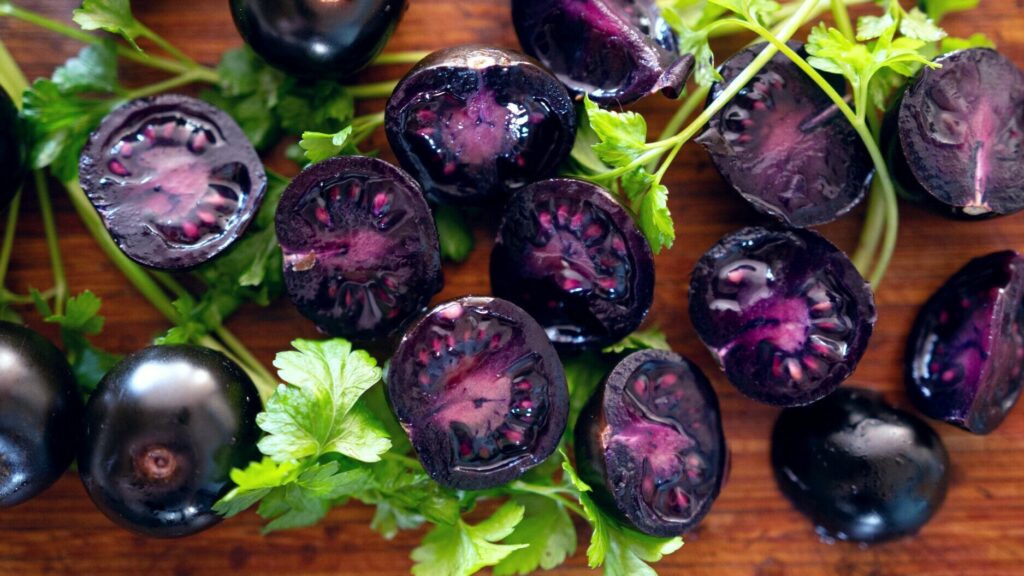
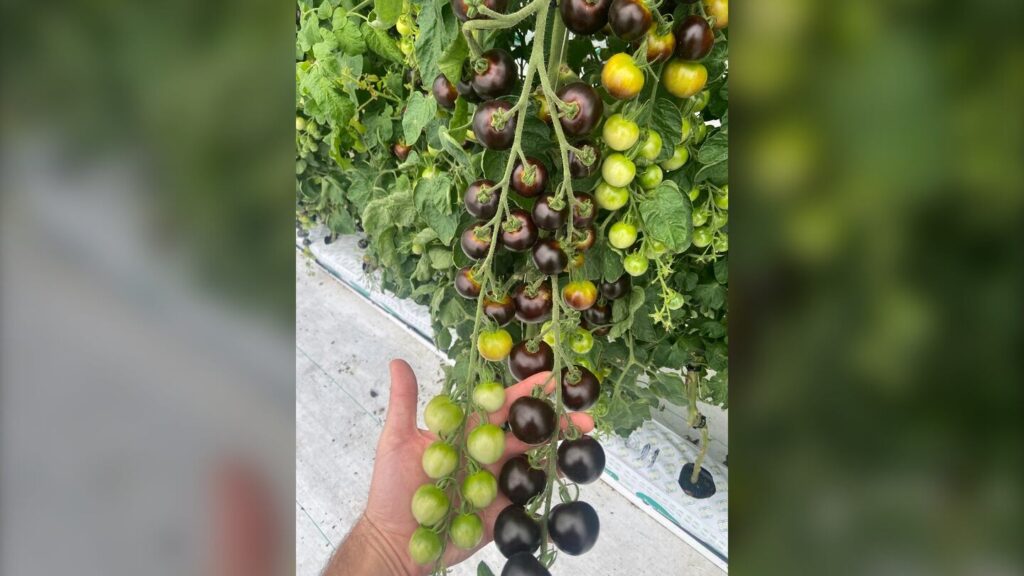
Canadian regulators have recently approved a genetically modified purple tomato for both growing and eating, making it very likely that you’ll start seeing deep-purple tomatoes in grocery stores and home gardens in Canada as soon as 2026. This variety, developed with added genes that boost anthocyanin production (the same antioxidant compounds found in blueberries and eggplants), was assessed by Health Canada under its Novel Foods safety guidelines and deemed safe for food use. These same genes are responsible for the unmistakable rich purple colour of the fruit — a trait that caught widespread attention online and in gardening communities.
What makes this moment particularly notable is not just the unusual colour of the fruit, but that this could become the first genetically modified tomato widely available to Canadian gardeners and consumers, marking a potential shift in the kinds of modern crops entering everyday food systems. Even now, small packets of seeds are being sold online to gardeners who want to grow them at home this coming season — a first in Canadian gardening history.
Read more HERE
As someone who has spent decades growing food in backyard plots, market gardens, and teaching agriculture at the university level, I can tell you this with confidence: gardening is not stuck in the past.
Most people imagine farming as something frozen in time—heirloom seeds, red tomatoes, green cucumbers, and brown potatoes. But behind the scenes, plant science has been quietly reshaping what food can be. Some of these changes are controversial. Others are misunderstood. And a few are simply astonishing.
You may have recently heard about purple tomatoes, and thought, “There’s no way that’s real.”
It is. And it’s only the beginning.
This article explores 10 of the most fascinating genetically modified, gene-edited, and unusually bred crops—what they are, how they were developed, and whether they actually belong in a homestead or self-reliant garden.
Before we dive in, let’s clear up some confusion that almost every gardener has encountered at some point.
GMO vs Hybrid vs Heirloom (Quick Refresher)
Not all “strange” plants are genetically modified. In fact, most aren’t.
- Heirloom seeds are open-pollinated varieties passed down for generations, valued for flavor and seed-saving reliability – they breed true if you save the seed.
- Hybrid (F1) plants are crosses between two parent plants to combine traits like yield or disease resistance – their saved seeds won’t reliably reproduce the same plant.
- Genetically Modified (GMO) plants have specific genes inserted or altered in a lab – this cannot happen naturally through pollination.
- Gene-edited (CRISPR) plants tweak existing genes without adding foreign DNA – often indistinguishable from accelerated natural mutation.
Most home gardeners grow heirlooms and hybrids. True GMOs are still rare at the retail seed level—but that’s beginning to change.
A Quick Note on Male & Female Plants (Pollination Basics)
Some plants are self-pollinating, some rely on insects, and some have separate male and female plants.
- Monoecious plants (corn, squash) have male and female flowers on the same plant – wind or insects move pollen.
- Dioecious plants (kiwi, asparagus, some trees) have separate male and female plants – you need both for fruit.
- Self-fertile plants (tomatoes, peppers) pollinate themselves but still benefit from movement and insects.
Genetic modification does not remove the need for pollination—it only changes what the plant does once it grows.
The Top 10 Most Fascinating Crops
1. Purple Tomato (Anthocyanin Tomato)
- Genetically modified to produce high levels of anthocyanins—the same antioxidants found in blueberries – these compounds are linked to reduced inflammation and improved cardiovascular health.
This tomato was engineered to activate dormant pigment pathways already present in tomatoes. The result is a deep purple fruit that looks alien but tastes familiar. While full commercial availability is still limited, it represents a major shift toward nutrition-focused genetic modification.
2. Golden Rice
- Engineered to produce beta-carotene (vitamin A precursor) – designed to prevent blindness and malnutrition in developing regions.
Golden Rice is one of the most studied GMO crops in history. It’s not flashy, but it demonstrates how genetic modification can address real human needs without increasing pesticide use.
3. Virus-Resistant Papaya
- Modified to resist papaya ringspot virus – saved the Hawaiian papaya industry from collapse.
This is a classic example of GMO used as a defensive tool, not profit gimmick. Without it, papayas would have disappeared from entire regions.
4. Arctic Apples (Non-Browning Apples)
- Gene-silenced to prevent browning when cut – reduces food waste and oxidation without chemicals.
These apples don’t rot slower—they simply don’t turn brown when exposed to air. The modification switches off an enzyme already present in apples.
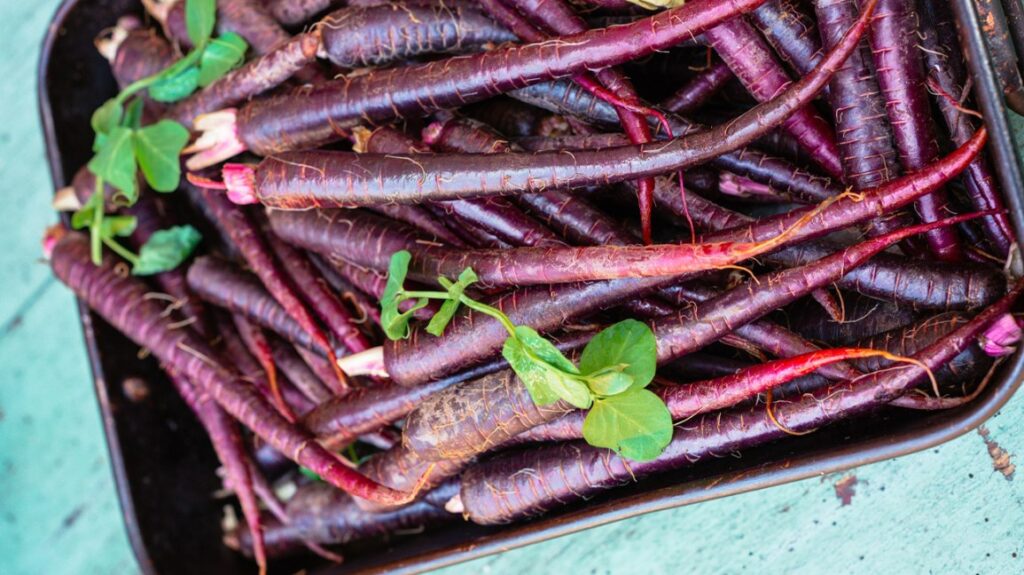
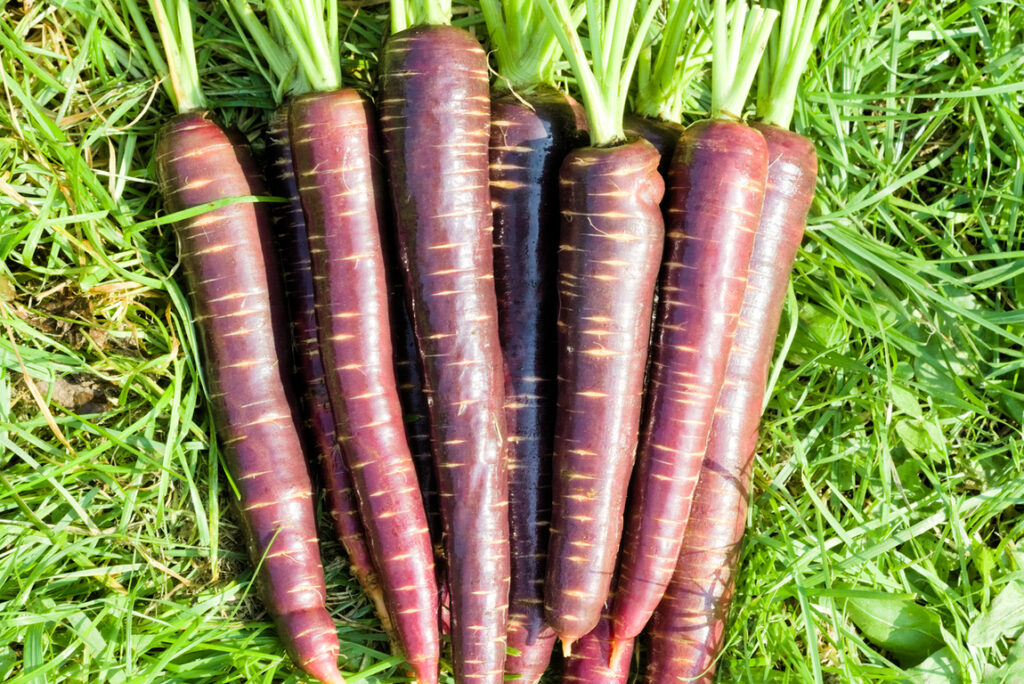
5. Purple Carrots (Anthocyanin-Rich Varieties)
- Selectively bred, not GMO – carrots were originally purple before orange varieties dominated.
Purple carrots are often mistaken for GMOs, but they’re a return to historical genetics. They’re rich in antioxidants and surprisingly cold-hardy.
6. Bt Corn (Insect-Resistant Corn)
- Contains a gene from Bacillus thuringiensis – produces a protein toxic only to specific insect pests.
While not commonly grown by homesteaders, Bt corn illustrates how genetic modification can reduce the need for chemical spraying.
7. Rainbow Corn (Glass Gem Corn)
- Intensely colorful kernels created through selective breeding – each ear is genetically unique.
Not GMO at all, but visually shocking enough that many assume it is. A perfect teaching example of what patient seed selection can achieve.
8. Purple Potatoes
- High anthocyanin content through selective breeding – retain color even after cooking.
These potatoes offer higher antioxidant levels than standard varieties and perform well in cool climates, making them ideal for northern growers.
9. Drought-Tolerant Wheat (Gene-Edited Lines)
- Modified to regulate water use more efficiently – critical for future food security.
Gene-edited crops like this may become essential for off-grid and marginal-land growers as climate instability increases.
10. Seedless Watermelon
- Triploid hybrid plants that produce sterile fruit – require pollinator plants nearby to trigger fruit set.
Not GMO, but biologically fascinating. They demonstrate how manipulation of chromosome counts can change plant behavior entirely.
Should Homesteaders Grow These?
The honest answer: it depends on your values and goals.
- If seed saving is central to your philosophy, heirlooms still reign supreme – genetic diversity lives in saved seed.
- If resilience, nutrition, and yield matter most, hybrids and future gene-edited crops may earn a place.
- If you value transparency, learning how plants work matters more than labels.
What concerns me far less than genetic modification itself is who controls the seeds. Centralized ownership—not plant science—is the real threat to food independence.
Final Thoughts from a Lifelong Grower
Plants have always been modified—by hand, by accident, and now by intention. The question is not whether we change crops, but how responsibly we do it.
The future garden will likely contain:
- Old heirlooms
- Smart hybrids
- Carefully designed new varieties
A resilient food system doesn’t reject knowledge—it integrates it wisely.
And that’s the mindset that keeps homesteaders fed for generations.
Learn how to off set your grocery bill in the winter by farming indoors