
How To Actually Enjoy The Outdoors During Bug Season (Without Hating Summer)
Every year, the same thing happens. Spring finally arrives after months of cold weather, people get excited to go outside again, the forests turn green, gardens come alive, evenings become warm enough for campfires — and then the bugs arrive. Mosquitoes, blackflies, gnats, and every other flying parasite in existence suddenly appear all at once like nature decided humans were part of the food chain again.
For a lot of people, bug season quietly ruins the best part of the year. There is something deeply frustrating about standing in beautiful wilderness while getting swarmed by insects every few seconds. You start the evening excited to hike, camp, fish, garden, or sit by a fire, and thirty minutes later you are slapping your arms, scratching your ankles, and wondering why the outdoors suddenly feels hostile.
That frustration is real, especially in places with wet springs, heavy forest, standing water, and humid weather. Northern regions, lakes, marshes, swamp edges, and wooded trails can become brutal during May and June. Some people stop hiking entirely during peak bug season because the experience becomes exhausting instead of relaxing.
The problem is that most mosquito advice online is either unrealistic or overly simplistic. One article tells you citronella solves everything. Another says buy industrial-strength chemicals and coat your entire body in synthetic spray. Then there are the gimmicks: ultrasonic bug repellents, miracle bracelets, fake “all-natural” sprays that barely work, and backyard gadgets that sound impressive but do almost nothing.
The truth is more practical and a little less exciting. People who consistently enjoy the outdoors during bug season usually do not rely on one miracle product. They use layers of strategy. Timing, airflow, clothing, camp placement, smoke, repellents, movement, and realistic expectations all matter. Bushcraft and outdoor living are rarely about perfect solutions. They are about stacking advantages.
Why Bugs Get So Bad In Spring And Early Summer
Mosquitoes and blackflies are not randomly annoying. They explode in numbers for specific environmental reasons. Spring melt, standing water, rising temperatures, humidity, and low wind conditions create ideal breeding environments. Tiny puddles, flooded ditches, marshes, clogged gutters, ponds, old tires, buckets, and swampy forest areas all become mosquito factories once temperatures rise.
Mosquitoes especially thrive in still water because their larvae develop there. According to the Centers for Disease Control and Prevention, mosquitoes can breed in extremely small amounts of standing water, including containers holding only a few inches. Blackflies are different and often breed near moving water like streams and rivers, which is why certain hiking areas suddenly become miserable during peak season.
Humidity also matters more than many people realize. Warm damp evenings with little wind are almost perfect mosquito conditions. If you have ever gone outside during a calm humid sunset and suddenly felt surrounded within minutes, that is not your imagination. Mosquito activity often spikes during low-light periods when temperatures and moisture levels are ideal.
Interestingly, the worst bug periods are often temporary. In many northern regions, bug pressure peaks heavily during late spring and early summer, then gradually becomes more manageable later in July and August as conditions change. That does not mean bugs disappear entirely, but the truly aggressive swarms often taper down after the peak breeding cycle slows.
Before getting into techniques, it helps to understand one important thing: no strategy completely eliminates bugs outdoors. Anyone promising total mosquito immunity is probably selling something.
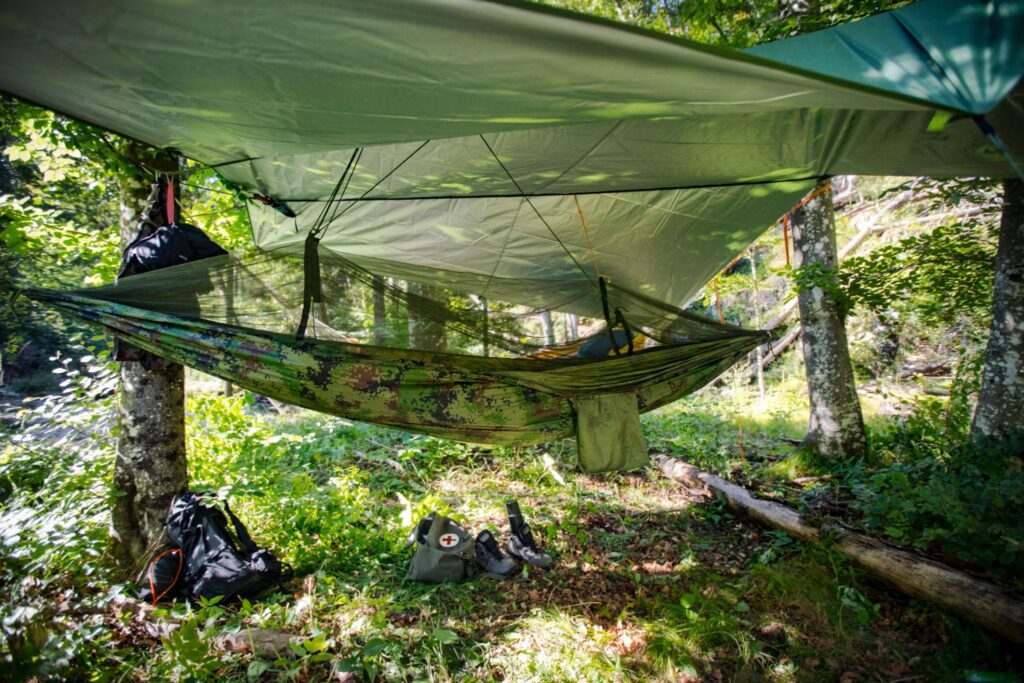
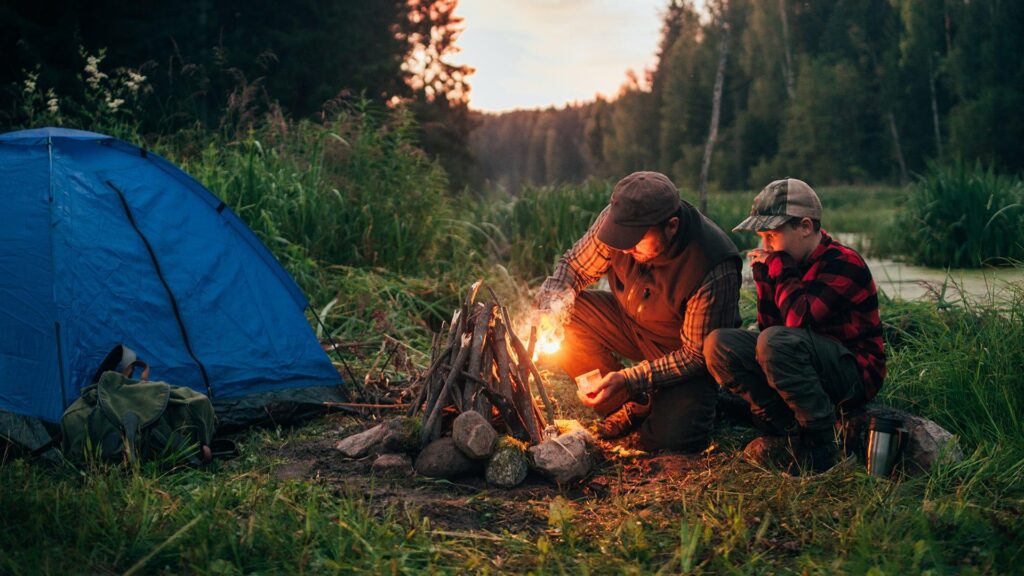
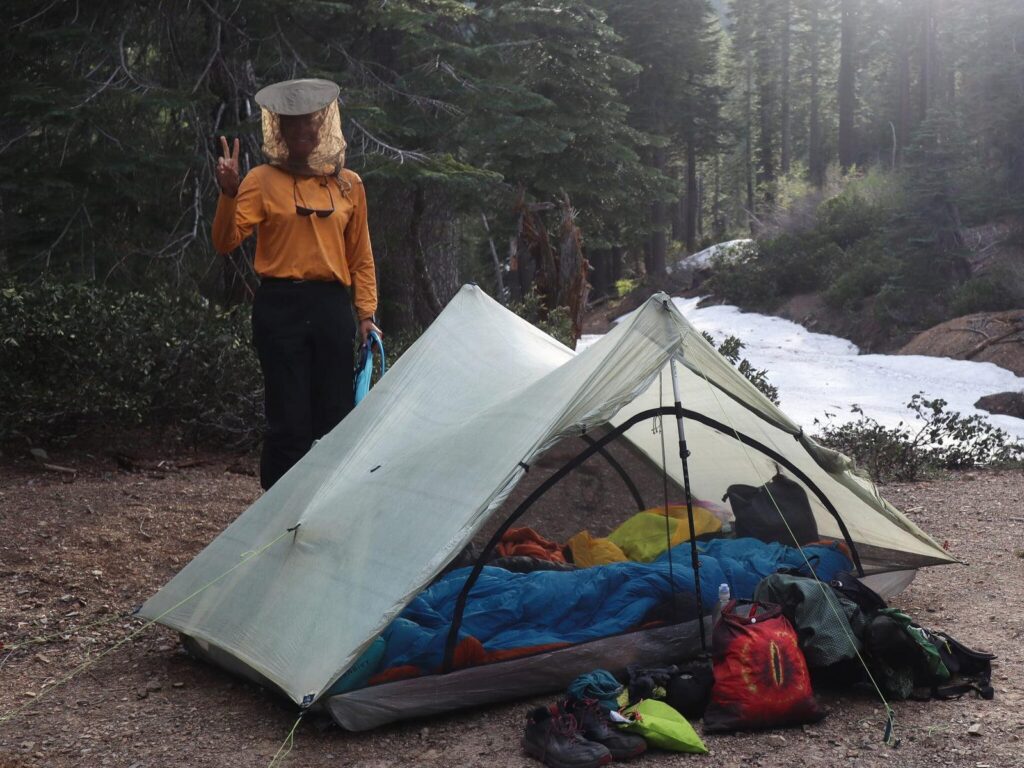
The images below show the reality of bug season outdoors — from swamp-edge mosquito pressure to practical bushcraft bug-management setups that actually make summer more enjoyable.
The Myth Of The Perfect Bug Solution
This is where outdoor people become skeptical very quickly. Almost everyone has tried some product that promised amazing results and then failed miserably in real conditions. That skepticism is healthy because mosquito control is one of those industries filled with exaggerated claims.
Citronella is a good example. It smells nice, feels natural, and gets marketed constantly, but on its own it is often weaker than people expect. Studies have shown citronella can provide some mosquito repellency, but usually for limited time and limited range compared with stronger repellents. A single candle on a still humid evening is not going to protect an entire backyard.
Mosquito coils are another controversial option. They absolutely can work to some degree outdoors because the smoke helps repel insects, but many people dislike the smell and worry about breathing the smoke in enclosed spaces. Lighting one indoors usually feels terrible almost immediately. Even people who use coils effectively outside often avoid using them inside tents, cabins, or rooms because the air becomes unpleasant fast.
Bug zappers are satisfying psychologically because hearing mosquitoes explode feels like revenge. The problem is that many bug zappers kill huge numbers of harmless insects while doing surprisingly little against mosquitoes specifically. Mosquitoes are more strongly attracted to body heat and carbon dioxide than bright UV light, which means bug zappers sometimes become more entertainment than solution.
Then there is the chemical debate. DEET works extremely well. Picaridin also performs strongly and is increasingly respected because many people find it less greasy and less harsh-smelling. But some people dislike coating themselves in chemical repellents every evening, especially around children or during repeated exposure through summer.
Natural oils exist too. Lemon eucalyptus oil, cedar oil, lavender, peppermint, and other plant-based repellents can help somewhat, but they are rarely magic forcefields. The honest answer is that most natural repellents reduce annoyance rather than eliminate it.
That honesty matters because realistic expectations prevent disappointment.
Timing Matters More Than Most People Think
One of the simplest bug-control strategies costs nothing: timing. Mosquito activity changes dramatically depending on weather, humidity, sunlight, temperature, and wind.
Early mornings and evenings are usually worst because mosquitoes prefer cooler, lower-light conditions. Calm humid evenings after rain can become almost unbearable in some areas. Midday sunlight, higher temperatures, and stronger airflow often reduce mosquito pressure significantly.
This is why experienced hikers, anglers, hunters, and bushcrafters sometimes structure their day around bug movement. They may travel during windy daylight hours and avoid swampy low areas near dusk. They understand that environmental conditions influence bug intensity more than any single spray bottle.
Wind is especially important. Mosquitoes are weak fliers. Even moderate airflow can reduce their ability to land effectively. This is why breezy lakeshores, ridgelines, and open areas often feel dramatically better than dense stagnant forest pockets.
That same principle works at home too. A simple fan on a patio can make a surprisingly large difference because it disrupts mosquito flight and disperses the carbon dioxide humans naturally exhale. Sometimes the simplest solutions outperform expensive gimmicks.
Bushcraft Camp Placement Changes Everything
Camp placement is one of the most underrated outdoor bug strategies. Many beginners accidentally choose beautiful-looking campsites that become mosquito nightmares after sunset.
Low wet areas trap moisture and stagnant air. Thick brush holds humidity. Swamp edges become insect breeding zones. Areas with poor airflow can turn into mosquito chambers once the sun goes down.
Bushcraft-minded campers often prioritize airflow almost as much as scenery. Slight elevation changes, open tree spacing, breezy ridges, and locations with moving air dramatically improve comfort. A campsite near water may look perfect initially, but if it lacks airflow, bug pressure can become overwhelming.
This is where outdoor awareness becomes important. Once you start noticing environmental patterns, you can predict bug conditions more accurately. You begin recognizing “mosquito terrain” before even unpacking your gear.
Smoke also plays a role here. Traditional campfires helped humans deal with insects long before chemical sprays existed. A smoky fire does not eliminate mosquitoes completely, but it can absolutely improve comfort nearby. Slightly damp or punky wood often creates more smoke, which is why some bushcraft setups intentionally encourage controlled smoke output during heavy bug conditions.
There is a balance though. Nobody wants to sit in choking smoke all evening either. Good fire placement matters. The goal is enough smoke to disrupt insects without turning camp into a smokehouse.
Clothing Is More Important Than Repellent
People often obsess over sprays while ignoring clothing entirely. In reality, clothing strategy is one of the most effective anti-bug tools available.
Loose long sleeves dramatically reduce bites compared with exposed skin. Thin breathable fabrics often work surprisingly well during summer. Tight athletic clothing can actually make things worse because mosquitoes can bite through fabric pressed directly against the skin.
Color matters too. Mosquitoes are often more attracted to dark colors and high heat absorption. Lighter clothing may reduce attraction somewhat while also staying cooler in sunlight.
Head nets deserve more respect than they get. Many people avoid them because they look ridiculous, but during severe blackfly or mosquito conditions they can completely transform the outdoor experience. A simple bug net over a hat can restore sanity during peak swarm conditions.
This is one of those funny realities of bushcraft and hiking: practical gear often looks less glamorous than social media survival aesthetics. But experienced outdoorsmen usually care more about comfort and effectiveness than looking tactical.
Backyard Strategies That Actually Help
The same principles used in the bush apply surprisingly well to backyards. Most people cannot eliminate every mosquito nearby, but they can reduce pressure significantly.
The first step is reducing standing water. Even tiny containers can become breeding sites. Bird baths, buckets, clogged gutters, flower pots, old tires, tarps, and low spots in lawns all matter.
Fans work extremely well on patios because mosquitoes struggle against moving air. Screened spaces help enormously too. Many people discover that a simple screened gazebo or screened porch completely changes how often they enjoy summer evenings.
Strategic lighting also matters. Bright white lights attract all kinds of insects. Warm lower-output lighting usually creates a more comfortable environment.
Some people plant herbs like basil, lavender, mint, rosemary, citronella grass, and marigolds near patios or outdoor sitting areas. The effect is usually moderate rather than miraculous, but layered with other strategies, these plants can contribute to a more pleasant space while also looking attractive.
The key word again is layered. No single backyard trick solves everything. Combined strategies work much better.
The Chemical Debate: DEET, Picaridin, And Natural Alternatives
This is probably the most controversial part of bug control because people have strong opinions about chemicals.
DEET remains one of the most effective mosquito repellents available. According to the Environmental Protection Agency, when used correctly, DEET has a strong safety profile and remains highly effective against mosquitoes and ticks. Many experienced outdoorsmen rely on it heavily during extreme bug conditions because it works consistently.
Picaridin is another increasingly popular option because many users find it less oily and less chemically harsh-feeling while still offering strong protection. Some outdoor users now prefer it specifically because it feels more comfortable on skin and gear.
Natural alternatives exist too, but realism matters. Oil of lemon eucalyptus has shown meaningful repellency in some studies. Cedar oil, peppermint, lavender, citronella, and other botanical options may help somewhat. But they often require more frequent application and usually do not match stronger synthetic repellents during severe conditions.
That does not mean natural options are useless. They simply work best as part of a broader strategy rather than a complete replacement for everything else.
The healthiest mindset is probably flexibility. During mild evenings, maybe lightweight clothing, airflow, and mild repellents are enough. During severe blackfly season deep in the bush, stronger protection may simply be worth it.
Why Bug Season Feels Worse Than It Used To
A lot of people swear bugs are becoming worse over time. Some of that may be nostalgia, but environmental changes likely play a role too.
Warmer temperatures, wetter springs, changing rainfall patterns, urban standing water, and longer warm seasons can all influence mosquito populations. Climate scientists and public health agencies have discussed how changing environmental conditions may expand mosquito ranges and increase certain insect populations in some areas.
Modern outdoor habits also matter. More people are spending time outdoors casually without traditional outdoor clothing, smoke, or environmental awareness. If someone walks into swamp-edge forest at dusk wearing shorts and no airflow, they are going to have a rough experience no matter what spray they bought.
There is also an interesting psychological effect. Bugs interrupt relaxation. One mosquito can destroy focus completely because humans are wired to react aggressively to biting insects. That constant low-level irritation drains enjoyment quickly.
This is why solving bug problems matters more than people think. It is not just about comfort. It is about reclaiming the outdoors.
Helpful External Resources
The CDC has practical mosquito-control guidance for reducing standing water and minimizing bites:
CDC Mosquito Control Tips
The EPA provides information comparing mosquito repellents and how DEET and picaridin function:
EPA Insect Repellent Guide
Final Verdict: The Goal Is To Enjoy Summer Again
The most important thing to understand about bug season is that no perfect solution exists. Mosquitoes and blackflies are part of the outdoors, especially during spring and early summer. But that does not mean you have to surrender your entire summer to them.
The people who handle bug season best usually combine multiple simple strategies:
- smart timing
- airflow
- better camp placement
- practical clothing
- smoke
- realistic repellents
- reducing standing water
- managing expectations
That layered approach works because it reflects reality instead of fantasy marketing.
And honestly, that is very bushcraft in spirit. Bushcraft has never really been about perfect conditions. It is about adapting intelligently to the environment instead of fighting it emotionally.
The outdoors during May, June, and July can still be incredible. Forests feel alive, gardens explode with growth, lakes warm up, trails reopen, and evenings become beautiful again after winter. The goal is not to create a bug-free world. The goal is to make the outdoors enjoyable enough that you actually want to be out there again.
Because once the bugs stop controlling the experience, summer starts feeling like summer again.
I make sure to not even bother going into the forest during May and June. Especially if it’s a mucky lowland forest, they are the worst!