
How to Start Seeds Indoors Cheaply: A Real Budget Setup That Actually Works
Starting seeds indoors can feel like one of those projects people overcomplicate. You go online looking for simple advice and suddenly it sounds like you need a greenhouse, lab-grade lighting, expensive trays, humidity controls, timers, fans, shelving systems, and a second mortgage. That story sells products, but it does not always reflect reality. Plenty of productive gardeners in colder climates start strong seedlings every spring using practical, low-cost setups built from shelves, reused containers, affordable lights, and consistency.
For Zone 4 and Zone 5 growers, indoor seed starting can be especially valuable because the outdoor growing season is shorter. Warm-weather crops like tomatoes and peppers often need a head start if you want worthwhile harvests before fall arrives. At the same time, not every seed belongs indoors. Some plants resent transplanting, some grow faster direct-sown outside, and some simply waste your indoor space. Knowing the difference can save money, effort, and frustration.
The smartest approach is not starting everything indoors. It is starting the right things indoors, using cheap gear that actually works, and transplanting at the right time once frost danger has passed.
Why Indoor Seed Starting Makes Sense in Zone 4–5
Gardeners in mild climates can sometimes sow directly outside early and let nature do the work. In colder regions, spring often teases warm weather and then snaps back with frost, cold rain, or miserable overnight lows. That creates a shorter reliable season, especially for heat-loving crops.
Indoor seed starting stretches your season without breaking the rules of your climate. While snow, wind, or mud still dominate outside, you can already be growing healthy transplants under lights. By the time outdoor conditions stabilize, your tomatoes are weeks ahead, your peppers have real size, and your herbs are established.
That advantage matters more than many beginners realize. A six-week head start can be the difference between abundant ripe tomatoes and a plant still trying to catch up in late summer.
Cheap Seed Starting Setups Can Work Extremely Well
A lot of people assume budget setups equal poor results. Usually the opposite problem happens: people buy gear first and never learn the basics. Plants care about conditions, not branding. If they receive enough light, proper moisture, warmth, airflow, and decent soil, they can thrive in a simple system.
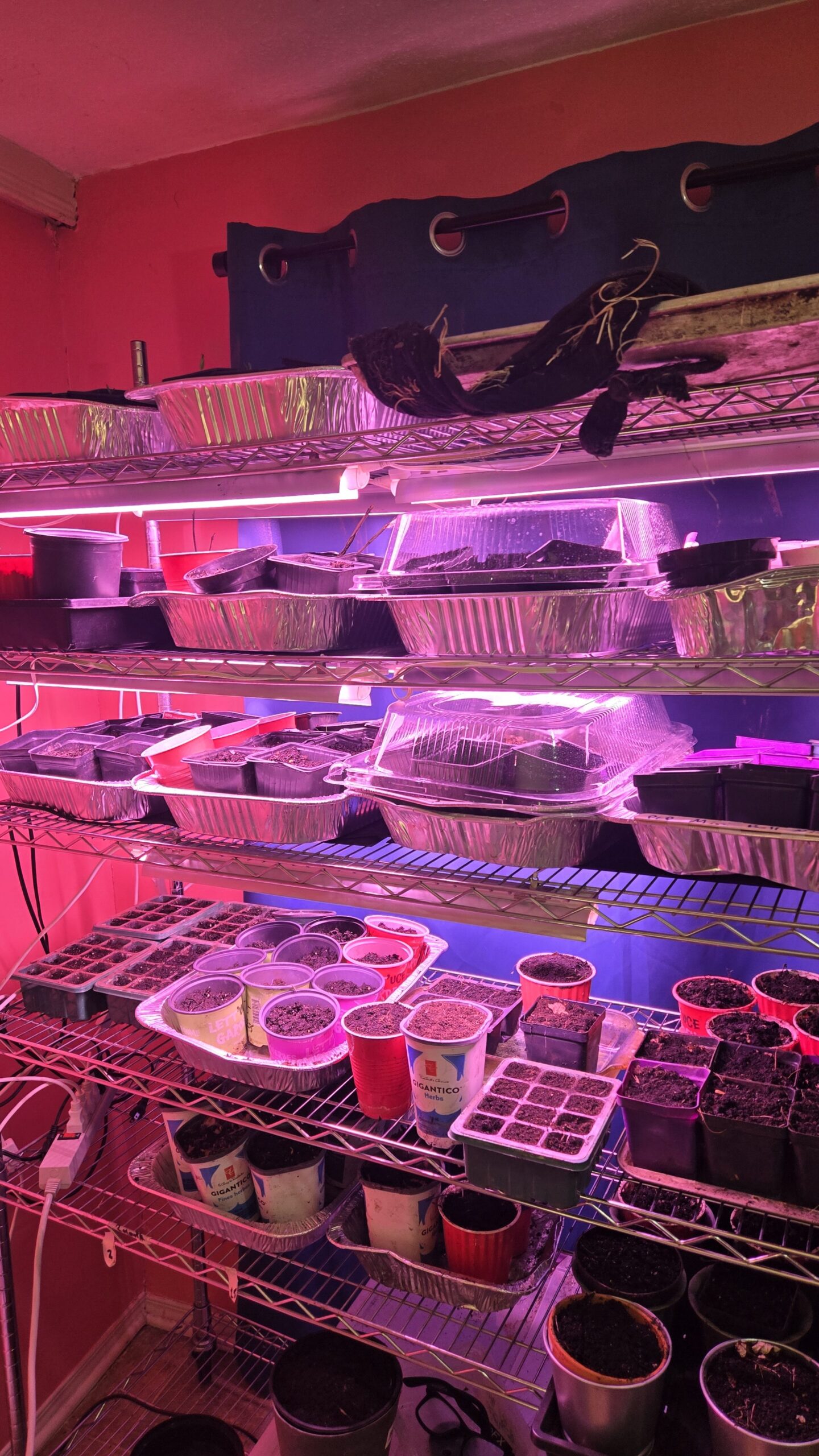
A practical setup might include a used wire shelving rack, LED grow lights mounted under each shelf, aluminum trays for catching water, reused yogurt containers or plastic cups with drainage holes, and a heat mat for germination. That kind of system can grow dozens of plants in a small footprint while costing far less than packaged “all-in-one” kits.
Your own shelving-style setup is a perfect example of functional gardening. It is not built for social media approval. It is built to produce seedlings efficiently. That mindset usually wins in the long run.
What Plants Are Best Started Indoors in Zone 4–5
This is where many people waste time. Indoor space is valuable, especially if you are running shelves and lights. Use that space for crops that truly benefit from a head start.
Tomatoes are one of the best indoor-started crops for cold climates. They transplant well, respond strongly to extra growing time, and reward early preparation with earlier fruit and heavier yields. Peppers are another smart choice because they often germinate slowly and need warmth. In Zone 4–5, peppers especially benefit from starting indoors.
Eggplant, basil, celery, onions, leeks, broccoli, cabbage, cauliflower, and many flowers also make good candidates. Herbs like parsley and oregano can be worthwhile too, especially if you use them often.
Strong indoor candidates include:
- Tomatoes
- Peppers
- Eggplant
- Basil
- Onions
- Leeks
- Broccoli
- Cabbage
- Cauliflower
- Celery
- Many annual flowers
These plants either need longer seasons, slow starts, or transplant reasonably well.
What Usually Should Be Direct Sown Outside
Not everything needs pampering indoors. Some crops are faster, easier, and healthier when planted directly into the garden once soil conditions allow.
Carrots are the classic example. They dislike root disturbance, and transplanting them is usually unnecessary trouble. Beets, radishes, peas, beans, corn, and many greens often do just fine when sown outside at the right time. In many cases they outperform indoor starts because their roots develop undisturbed.
This is one of those areas where beginners often overdo things. Starting carrots indoors may feel productive, but it usually creates extra work for weaker results.
Better direct-sown crops include:
- Carrots
- Radishes
- Beets
- Peas
- Beans
- Corn
- Spinach
- Lettuce
- Dill
- Turnips
Sometimes the smartest move is doing less, not more.
Timing Matters More Than Fancy Equipment
Many seed-starting frustrations come from poor timing rather than poor tools. Start too late and plants are tiny when transplant time arrives. Start too early and you end up babysitting oversized, rootbound plants indoors while frost still threatens outside.
For many Zone 4–5 gardeners, late May can be a realistic safe planting window depending on exact location and yearly weather. That patience is often wiser than rushing plants outside in early May because one warm weekend felt promising.
Cold soil slows growth. Chilly nights stress plants. Frost can erase weeks of progress overnight. A slightly later transplant into warm soil often catches up quickly and sometimes surpasses earlier stressed plants.
That lesson applies widely: timing can outperform intensity.
How to Start Seeds Indoors Cheaply Without Regret
You do not need to spend heavily to build an effective system. Focus on the few variables that matter and ignore the noise.
Use affordable LED grow lights positioned close to seedlings. Reuse containers where possible, but add drainage holes. Buy decent seed-starting mix rather than dragging dense garden soil indoors. Use trays to bottom-water and keep mess contained. If budget allows, one heat mat can improve germination for warm-weather crops.
A simple timer is also worth considering because consistency matters. Plants respond well to predictable light schedules, and timers remove forgetfulness from the equation.
Cheap should mean efficient, not careless.
Common Mistakes That Hurt Seedlings
Weak light is one of the biggest killers of confidence. Seedlings stretch tall and thin when they chase light. People then assume they lack talent, when really they just needed lights positioned closer.
Overwatering is another common issue. Constantly soaked soil can stunt roots, encourage fungus, and collapse seedlings. Water thoroughly, then allow some drying between cycles depending on crop and container size.
Crowding also creates problems. Starting hundreds of cells feels exciting until airflow disappears and everything competes for light. It is often better to grow fewer strong plants than many weak ones.
Finally, avoid planting every seed packet just because you own it. Grow what you actually want to eat, preserve, or enjoy.
Why Cheap Gardening Skills Matter
There is something valuable about learning to grow food without relying on expensive systems. It builds judgment. You begin noticing what matters and what is mostly marketing. That mindset transfers into many parts of life: tools, business, home projects, even personal habits.
People often delay progress because conditions are not perfect. Gardening punishes that mindset. Seasons move on whether you are ready or not. Sometimes the shelf, the reused cups, and the budget lights are enough to begin.
And once you begin, you improve naturally.
Final Verdict: What Should Zone 4–5 Gardeners Actually Do?
If you live in a colder climate, starting seeds indoors cheaply is absolutely worth it—when done strategically. Use indoor space for crops that benefit from extra time like tomatoes, peppers, onions, brassicas, herbs, and other slow starters. Direct sow crops like carrots, beans, peas, and radishes that usually prefer to grow where they land.
Forget the myth that success requires expensive equipment. A practical rack, decent lights, trays, soil mix, and daily attention can raise more healthy plants than many people need. What matters most is timing, consistency, and choosing the right crops for your region.
So if spring still looks unreliable outside, start smart inside. Then when late May arrives and frost risk is truly gone, move strong plants into the garden with confidence.
That is not flashy gardening.
It is effective gardening.