
When the Garden Starts Looking Like a Jungle
There is a very specific moment in early summer when a garden stops looking charming and starts looking suspicious. A few days of rain pass through, the soil warms up, and suddenly the weeds seem to double in size overnight. You walk out expecting to admire your tomatoes, beans, cucumbers, squash, peppers, or whatever else you planted, and instead you find yourself playing a frustrating game of “where did my actual plants go?”
This happens fast because weeds are opportunists. They do not need perfect conditions, careful transplanting, or a neat little plan written in a notebook. Give them moisture, sunlight, bare soil, and a little neglect, and they will happily fill every open space before your vegetables even realize the race has started. That is why a garden can look manageable one week and completely out of control the next.
The good news is that an overgrown garden is not automatically ruined. It feels discouraging, but this is a normal homestead problem, not a personal failure. The trick is to stop thinking of weed control as one magic spray or one afternoon of angry pulling. A better approach is to combine a few practical tactics: remove what is already there, protect the plants you want, cover the bare soil, and stop new weeds from getting easy sunlight.
What Weed Control Really Is
Weed control is not about creating a perfectly sterile garden where nothing wild ever appears. That sounds nice in theory, but in a real outdoor garden, especially one that gets rain, wind-blown seeds, compost, birds, wildlife, and last year’s hidden seed bank, weeds are part of the system. The real goal is to keep them from outcompeting your crops.
A weed becomes a problem when it steals light, water, nutrients, airflow, or physical space from the plants you actually want. A tiny weed beside a full-grown tomato plant is not an emergency. A thick carpet of weeds swallowing young seedlings is different. Timing matters. Weed pressure is most dangerous when your crops are young, small, newly transplanted, or still trying to establish roots.
This is why the best weed strategy is layered. You want short-term control for the weeds already growing, medium-term suppression with mulch or barriers, and long-term prevention by avoiding bare soil. Most people jump straight to sprays because sprays feel decisive. But in a vegetable garden, the less dramatic methods often work better because they protect the soil instead of punishing it.
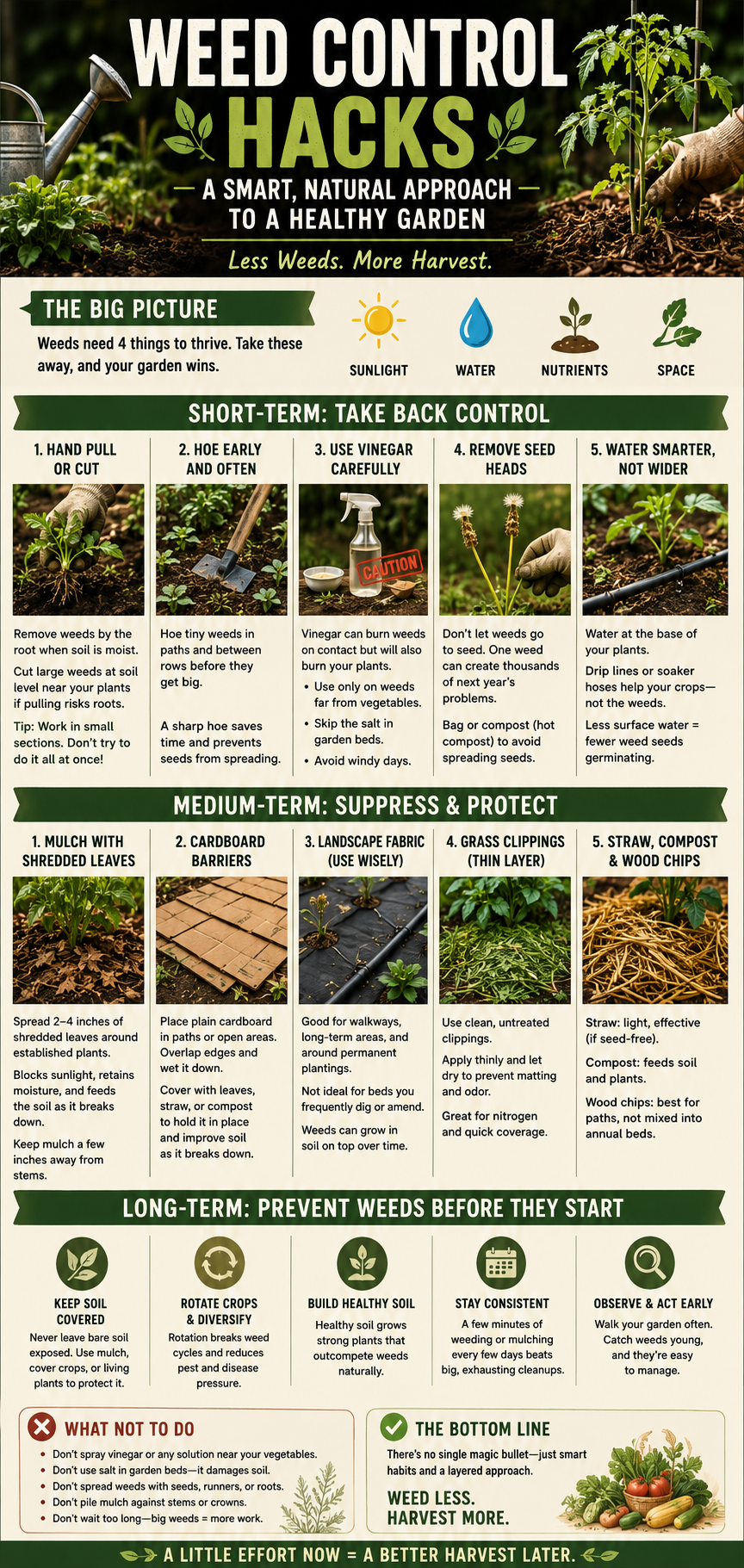
Here is the basic weed-control system this article is working toward: clear the crop rows, pull or cut the biggest weeds, avoid spraying anything risky near food plants, lay down organic mulch once the plants are established, and keep paths covered so weeds do not constantly creep back in from the sides.
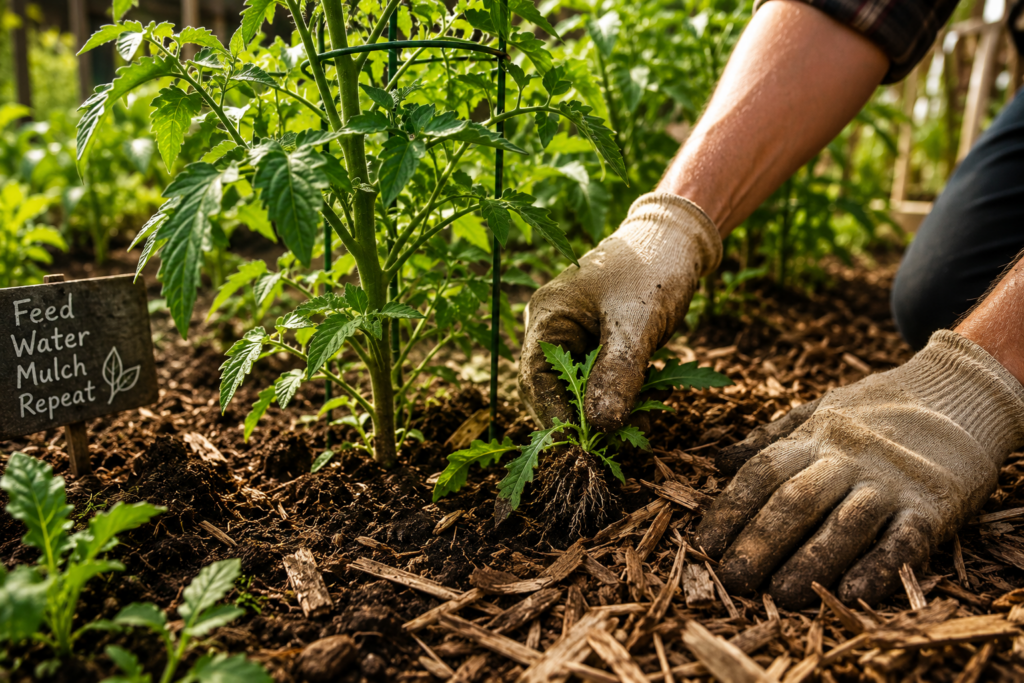
Before we get into the specific hacks, this image group would help show readers the main options visually: spraying only where safe, mulching around crops, using cardboard or fabric in walkways, and turning garden waste into a useful cover layer.
Why People Love Weed Hacks
Weed hacks are popular because they promise a shortcut at exactly the moment gardeners are tired, sweaty, and annoyed. A bottle of vinegar, a handful of salt, some dish soap, a few saved bags of leaves, or a roll of landscape fabric can feel like the secret answer. The idea is attractive because it suggests you can beat the garden chaos without buying expensive products or spending hours bent over with a hand tool.
There is also a homesteading appeal to using what you already have. Saved fall leaves, grass clippings, old cardboard boxes, pulled weeds, and homemade sprays all fit the practical, low-waste mindset. That part is good. The best garden systems usually do use local materials and simple routines instead of constantly buying new things.
But this is where we need to be a little skeptical. Not every natural-sounding hack is automatically safe, and not every store-bought product is automatically evil. Salt is natural, but too much salt can damage soil. Vinegar is familiar, but it can burn crop leaves just as easily as weed leaves. Landscape fabric can suppress weeds for a while, but it can become a headache when roots, soil, and weed seeds get tangled into it.
So the question is not “Is this hack natural?” The better question is: where does this tactic make sense, where can it backfire, and how do I use it without damaging the plants I actually want to harvest?
The Vinegar Spray Hack: Useful, But Not Beside Your Vegetables
The classic homemade weed spray usually involves vinegar, water, salt, and sometimes dish soap. The basic idea is that vinegar burns down the green top growth of the weed, the soap helps the liquid stick to the leaves, and the salt makes the area less friendly to regrowth. On a hot sunny day, especially on small young weeds, this can look surprisingly effective. The weeds wilt, brown, and collapse, which makes the method feel like a miracle.
The problem is that vinegar does not know the difference between a weed and a pepper plant. It is a contact herbicide, meaning it damages the plant tissue it touches. If you spray it near your vegetables and the wind drifts even a little, you can burn the leaves of your actual crops. A few droplets may not destroy a mature plant, but young seedlings and tender transplants can get hurt quickly.
Salt is the bigger concern in a food garden. Salt does not simply vanish after it kills a weed. If you repeatedly apply salt to growing areas, you can create soil where your vegetables also struggle. That might be acceptable in driveway cracks or gravel paths where you truly do not want anything growing, but it is a bad habit inside garden beds.
If you use vinegar at all, use it like a precision tool, not a garden-wide spray. Save it for driveway cracks, fence lines, gravel areas, patio edges, or isolated weeds far away from crops. In a vegetable bed, a safer option is to paint vinegar carefully onto weed leaves with a small sponge brush or use a cardboard shield behind the weed while spraying. Even then, avoid windy days and do not use salty mixes near your food plants.
Verdict on Vinegar
Vinegar can be useful for small weeds in non-crop areas, but it is not the main answer for an overgrown vegetable garden. It burns leaves, not necessarily roots, and perennial weeds can come back. Use it carefully, skip the salt in garden beds, and do not spray casually around plants you care about.
The Saved Fall Leaves Idea: Actually a Strong Move
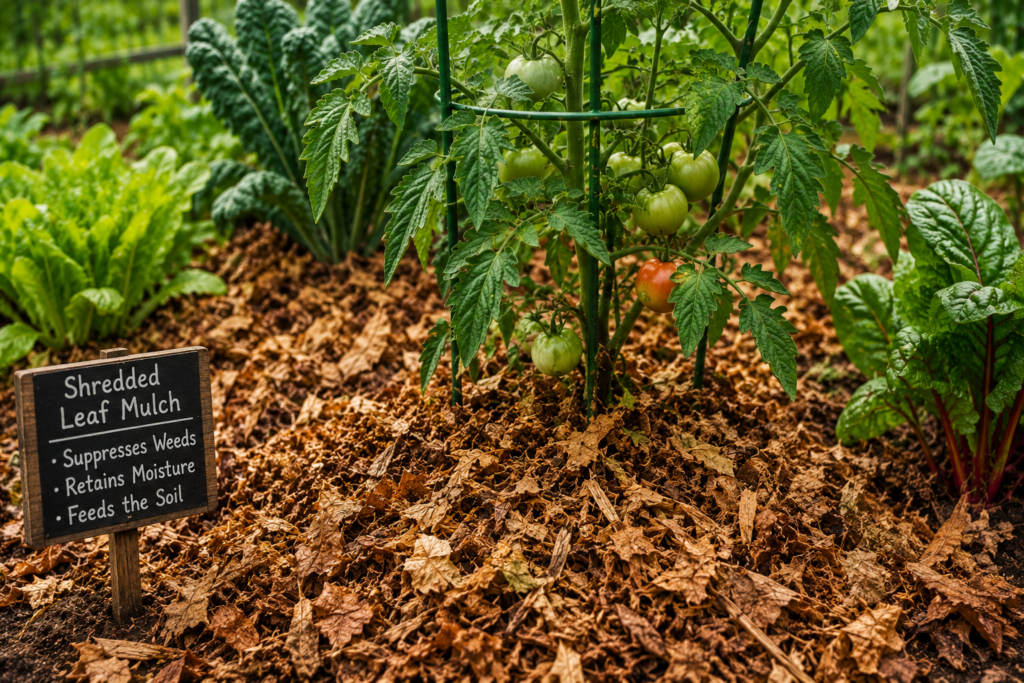
Saving fall leaves is one of the better homestead weed-control ideas, especially if you are trying to build soil instead of constantly fighting it. Leaves are free, abundant, easy to store, and useful as a mulch once they are broken down or shredded. They help cover the soil, block sunlight from weed seeds, reduce moisture swings, and slowly add organic matter as they decompose.
The key is not to dump whole matted leaves in thick wet slabs around tiny plants. Whole leaves can pack together, blow around, or form a soggy layer that blocks air and water. Shredded leaves are much better. You can run over dry leaves with a lawnmower, use a leaf shredder, or chop them up roughly before bagging them for storage.
Your idea of waiting until plants are around a foot tall before mulching around them is sensible. By then, the crops are easier to see, less likely to be buried, and usually stronger. Once the plants are established, you can spread shredded leaves around them in a loose layer. Keep the mulch pulled back slightly from the stems so you do not create a damp collar that encourages rot, slugs, or disease.
For vegetables, a layer around 2 to 4 inches is a practical range. Thin enough that water can still get through, thick enough to shade the soil, and loose enough that air can still move. If the leaves settle down after rain, you can fluff them up or top them up lightly. The goal is soil armor, not a sealed mattress.
Best Way to Store Leaves for Next Year
The simplest system is to collect leaves in the fall, shred them if possible, and store them in bags, bins, or a dry pile. Poke a few holes if they are in plastic bags so moisture does not create a nasty anaerobic mess. If they partially break down over winter, that is fine. Leaf mold and half-rotted leaves are excellent garden material.
If you have a ride-on mower, your idea gets even better. Rake leaves into a long loose pile, run them over a few times, then bag or pile the shredded material. Shredded leaves are easier to spread, less likely to blow away, and less likely to mat into a water-shedding layer. This is one of those boring-sounding habits that quietly makes you a better gardener every year.
Can You Use Pulled Weeds as Mulch?
This is where we need to separate a good idea from a risky one. Turning garden waste back into mulch is smart in principle. But using fresh pulled weeds as mulch can spread the exact problem you are trying to solve if those weeds have seeds, seed heads, runners, rhizomes, or root fragments that can re-root.
If the weeds are young, seed-free, and not aggressive spreaders, you can sometimes chop them and let them dry thoroughly before using them as a light mulch in paths or composting them. But if the weeds have gone to seed, do not spread them back across your garden. That is basically planting next month’s problem. The same goes for weeds like quackgrass, bindweed, creeping Charlie, Canada thistle, or anything that spreads through underground pieces. Chop those up and you may accidentally create more pieces capable of regrowth.
A safer system is to compost weeds properly or let them dry out completely before reusing them. If you are not running a hot compost pile that gets hot enough to kill seeds, be cautious. Many home compost piles are really just slow decomposition piles, which is fine for leaves and plant waste but not always enough for mature weed seeds.
So no, mowing up a pile of weeds and spreading them right away is not usually the best move unless you are certain they are seed-free and non-invasive. Chopped leaves are safer. Straw is safer if it is clean. Grass clippings can work if they are untreated and applied thinly. Weeds should be treated like suspicious material until proven innocent.
Hand Weeding Still Wins When the Garden Is Already Overwhelmed
Nobody wants to hear this when the weeds are waist high, but hand removal is still one of the most reliable ways to rescue a vegetable garden. Sprays and mulch are better at preventing or suppressing weeds than magically fixing a bed that is already swallowed. When weeds are tangled around your crops, your first job is careful extraction.
Start with the crop rows. Do not try to clear the whole garden in one heroic session. That is how people burn out, damage plants, and quit. Instead, choose one row or one section and expose the plants you care about. Pull weeds closest to the stems by hand so you do not accidentally uproot your vegetables with a hoe.
For bigger weeds, pull after rain when the soil is softer. Grip low near the base and ease the root out instead of snapping the top off. If a weed is too close to a crop plant and pulling it might disturb the roots, cut it at soil level with scissors, pruners, or a sharp knife. Cutting is not always permanent, but it buys light and airflow without yanking your crop out of the ground.
Once a section is cleared, mulch it immediately. This is important. If you pull weeds and leave the soil bare, you have basically reset the stage for the next wave. Weed, then cover. Weed, then cover. That is the rhythm.
The Hoe Method: Fast, Old-School, and Underrated
A hoe is not glamorous, but it is one of the best tools for staying ahead of weeds between rows. The trick is to use it early, when weeds are tiny. A sharp hoe can slice small weeds at the surface before they become a root-entangled mess. This is much faster than pulling each weed by hand.
The mistake is waiting too long. Once weeds are large, flowering, or wrapped around crop stems, hoeing becomes clumsy and risky. You can damage shallow vegetable roots, slice crop stems, or disturb too much soil. Disturbed soil can also bring buried weed seeds closer to the surface where they can germinate.
For a garden that has already exploded with weeds, use the hoe mostly in open pathways and between rows. Around the actual plants, switch to hand pulling or cutting. Once the garden is back under control, a quick hoe pass every few days can prevent the next jungle from forming.
Cardboard and Newspaper: The Cheap Barrier That Makes Sense
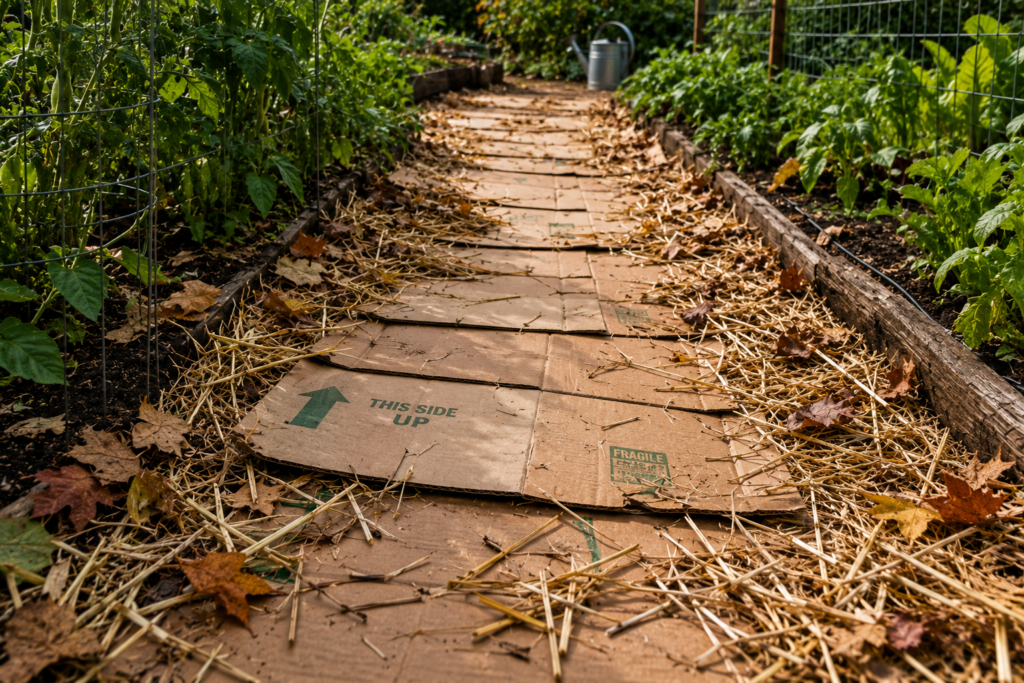
Cardboard is one of the best low-cost weed barriers for homestead gardens. It blocks light, smothers small weeds, and eventually breaks down into the soil. It is especially useful in walkways, around larger established plants, or when creating new beds over weedy ground.
Use plain brown cardboard when possible. Remove tape, plastic labels, staples, and glossy coatings. Overlap the edges generously because weeds love gaps. Wet the cardboard so it settles into place, then cover it with leaves, straw, compost, grass clippings, or wood chips to keep it from blowing away and to make it look less like a recycling pile exploded in your garden.
Cardboard is not perfect around tiny seedlings because it can be awkward to fit cleanly without burying or shading them. But for paths and open spaces, it is excellent. It also reduces the amount of mulch you need because the cardboard does the first layer of light-blocking.
Newspaper can work too, but it usually needs multiple sheets and a mulch layer on top. Cardboard lasts longer and is easier to handle in larger areas. If your garden is being invaded from the paths, cardboard plus mulch is one of the fastest ways to take back control.
Landscape Fabric: Helpful in Some Places, Annoying in Others
Landscape fabric sounds like the ultimate solution because it creates a physical barrier between weeds and sunlight. In some situations, it works well. It can be useful in permanent walkways, under gravel paths, around long-season crops with fixed spacing, or in areas where you are not constantly replanting and digging.
But in a living vegetable garden, fabric can become annoying. Soil and organic debris collect on top of it, weed seeds germinate in that layer, and roots can grow into the fabric. When that happens, pulling weeds becomes harder, not easier. Fabric also complicates adding compost, moving plants, changing layouts, and improving the soil naturally from the top down.
If you use fabric, I would use it mainly for paths, not all over your growing beds. For crop beds, organic mulch is usually better because it suppresses weeds while feeding the soil. Fabric is more of a barrier tool. Leaves, straw, compost, and grass clippings are soil-building tools.
A practical compromise is to use cardboard or fabric in walkways and shredded leaves around plants. That gives you weed suppression where you walk and soil improvement where your vegetables grow.
Store-Bought Weed Sprays: Read the Label and Respect Drift
Store-bought weed sprays can be effective, but they come with the same basic issue as homemade sprays: many are non-selective, meaning they can damage whatever green plant tissue they touch. That includes your vegetables. Even “natural” or “organic” herbicide products can burn crop leaves if the spray drifts.
If you use any commercial product, read the label carefully and treat the label as the rulebook. Check whether it is meant for vegetable gardens, paths, lawns, ornamental beds, or hard surfaces. Pay attention to wind, temperature, protective gear, re-entry time, and whether the product has restrictions around edible plants.
For a food garden, I would not make sprays the core strategy. They are better for cracks, edges, paths, and isolated weeds. In the actual growing area, physical removal and mulch are usually safer and more productive.
Grass Clippings: Good Mulch, But Apply Thinly
Grass clippings can be useful in a vegetable garden, but only if they are clean. Do not use clippings from lawns treated with herbicides, weed-and-feed products, or questionable chemicals. The last thing you want is to mulch your tomatoes with grass that contains residues harmful to broadleaf plants.
Fresh grass clippings are high in nitrogen and can heat, mat, smell, or turn slimy if applied too thickly. Use thin layers and let them dry first if possible. A light layer around established plants can suppress weeds and conserve moisture, but a thick wet pile can block air and water.
Grass clippings are especially useful in paths or around hungry plants, but they break down quickly. Think of them as a fast mulch, not a long-lasting armor layer. Leaves and straw tend to last longer as a surface cover.
Straw, Wood Chips, and Compost: The Other Mulch Options
Straw is a classic vegetable garden mulch because it is light, easy to spread, and good at covering soil. The risk is seed contamination. If you buy poor-quality straw or accidentally use hay full of seed heads, you may import a new weed problem. Clean straw is useful; seedy hay can be trouble.
Wood chips are excellent for paths and perennial edges, but I would be more careful about mixing them directly into annual vegetable beds. As a surface mulch, they are fine in the right place. As a tilled-in material, they can temporarily tie up nitrogen while decomposing. For vegetable rows, shredded leaves, straw, compost, or grass clippings are often easier to manage.
Finished compost can suppress tiny weeds if applied as a surface layer, but compost is not always weed-free unless it was made properly. It also feeds the soil, which feeds your crops, but if the compost contains viable weed seeds, it can bring new problems. Use good compost, and do not assume every dark crumbly pile is automatically clean.
Watering Strategy: Stop Helping the Weeds
One sneaky reason weeds explode is broad watering. If you water the entire soil surface, you water every weed seed too. Overhead watering and casual sprinkler use can turn the whole garden into a germination tray.
Drip irrigation, soaker hoses, or careful watering near the base of your crops can reduce weed pressure. You are still watering some weeds, but you are not giving every bare patch the same encouragement. This matters a lot once mulch is down because targeted watering plus covered soil creates a much less friendly environment for weed seedlings.
This is another reason mulch works so well. It does not just block light. It helps moisture stay where your crop roots can use it and reduces the constant wet-dry cycle on the soil surface that encourages weed germination.
The “Rescue My Garden This Week” Plan
If your garden is already overwhelmed, do not overthink it. Start with triage. Your job is not to make the whole garden perfect in one day. Your job is to save the crops first, then suppress the next wave.
Start by identifying your actual planted rows or crop clusters. If you cannot find them easily, use stakes, flags, string, or little markers. Then clear around each crop plant by hand. Give each plant a breathing circle so it has light and airflow again. Do not yank aggressively right beside the stem if the vegetable roots might come up with the weed roots.
Next, cut or pull the biggest weeds before they flower or set seed. If they already have seed heads, remove them from the garden instead of dropping them in place. Then clear the paths enough that you can move without crushing crops. Once you can see the structure again, mulch the cleared areas.
A simple rescue order looks like this:
- Clear directly around crop plants first.
- Pull or cut tall weeds before they shade your vegetables.
- Remove seed heads from the garden.
- Hoe open paths and row gaps.
- Lay cardboard in walkways if weeds are thick.
- Add shredded leaves, straw, or clean grass clippings around established plants.
- Keep mulch pulled back slightly from stems.
- Return every few days for quick maintenance.
That is the realistic way back. Not one magic hack. Just a sequence that stops the bleeding, protects the crops, and prevents the next flush of weeds from getting the same advantage.
The Best Long-Term Strategy: Never Leave Soil Bare
Bare soil is an invitation. Nature does not like empty ground. If you leave exposed soil in a garden, something will try to cover it. Your choice is whether that cover is weeds, mulch, cover crops, or intentional planting.
This is where homesteading and bushcraft thinking overlap nicely. In the wild, exposed soil is temporary. Leaves fall, grasses spread, plants die back, fungi work, insects move material around, and the ground gets covered. A good garden borrows from that pattern but makes it useful for food production.
After your crops are established, keep the soil covered with organic mulch. After harvest, cover the beds with shredded leaves, compost, straw, or a cover crop. In paths, use cardboard, wood chips, leaves, or another durable cover. The less bare soil you expose, the fewer easy opportunities weeds get.
This does not mean weeds disappear. It means they become weaker, fewer, and easier to pull. That is the real victory.
Evidence Supporters Cite
Supporters of natural weed control usually point to a few practical observations. Vinegar visibly burns small weeds. Mulch visibly reduces weed growth. Cardboard smothers vegetation by blocking light. Leaves improve soil texture over time. Hand pulling removes the whole plant when you get the root. These are not imaginary benefits; most gardeners have seen at least some of them work.
The strongest evidence is the simplest: weeds need light, space, and opportunity. Mulch and barriers reduce light. Pulling and hoeing remove existing growth. Dense crop planting and cover crops reduce open niches. Better watering avoids irrigating the entire weed seed bank. None of this is flashy, but it is reliable.
This is why old-fashioned methods survive. A sharp hoe, a pile of leaves, and a few sheets of cardboard do not look impressive on social media, but they can outperform a bottle of miracle spray when used consistently.
The Skeptical View: Where Weed Hacks Fail
The skeptical view is important because many weed hacks are oversold. Vinegar is often promoted like a harmless natural cure-all, but it can damage nearby crops and usually does not kill deep perennial roots. Salt can damage soil. Landscape fabric can become a tangled mess. Fresh weeds can spread seeds. Grass clippings can mat if applied too thickly. Mulch can cause stem rot if piled against plants.
Even hand weeding can create problems if you disturb crop roots or expose buried weed seeds. Hoeing too deeply can bring more seeds to the surface. Compost can introduce weeds if it was not hot enough or clean enough. In other words, every method has a context.
That does not mean the methods are bad. It means they need judgment. The best gardeners are not the ones who believe every hack. They are the ones who test carefully, observe results, and keep the tactics that work in their actual soil, climate, and garden layout.
Why Weed Control Matters Today
For a small homestead garden, weed control is not just about neatness. Weeds can reduce harvests, hide pests, trap moisture around plant stems, restrict airflow, and make gardening feel mentally heavier. When the garden gets too messy, people stop checking it. Then pest problems, disease, missed harvests, and more weeds pile up.
A cleaner garden is easier to work. You can see what is growing, notice yellowing leaves, spot insect damage, harvest on time, and water more intelligently. It also feels better. That matters more than people admit. A garden that feels manageable gets attention. A garden that feels like a punishment gets ignored.
The goal is not perfection. The goal is control. If your plants have light, airflow, water, and enough space to grow, you are winning. If weeds are present but not dominating, that is normal. Do not let the perfect Instagram garden become the enemy of a productive real one.
Final Verdict: The Best Weed Hack Is a System
The best weed-control hack is not vinegar, salt, landscape fabric, or one special tool. The best hack is a layered system: pull what is already threatening your crops, cut what you cannot pull safely, cover the soil immediately, and stop treating bare ground like it will behave itself.
Your saved fall leaves idea is one of the strongest options. Shred them, store them, and use them as mulch once your plants are established. Keep the layer loose, keep it away from stems, and top it up as it breaks down. That is a real homestead move because it turns a seasonal waste product into soil protection.
Use vinegar sparingly and carefully, mostly away from vegetables. Skip salt in the garden beds. Use cardboard in paths and weedy open areas. Use landscape fabric only where it genuinely makes sense, especially in walkways or more permanent zones. Be cautious with pulled weeds as mulch unless they are young, seed-free, and fully dried or properly composted.
If your garden is currently overwhelmed, do not panic. Choose one section, rescue the plants, mulch the cleared soil, and keep moving. Weeds love hesitation. Your job is to make the garden a little less inviting to them every time you step into it.
I just hand pulled a bunch of weeds and then hoed with a short hoe other areas. I left the weeds in the garden instead of throwing away. Does this matter much? the weeds will eventually shrink and turn brown.